March Dense News. Click For Infos. Bonjour & hallo,
Some of you may have noticed already that the label Notenuf has vanished. Fortunately, the two albums by A Sunny Day in Glasgow and The Battle Of Land and Sea will be available through the new label MisOjos-Discos.com.
All the best
DUNCAN Ò CEALLAIGH – Ecclesia Semper Reformanda 3″CD Parvoart
FOLKLABOR – The Slider In Advance CD Angelika Köhlermann
GETATCHEW MEKURYA & THE EX – 11 Ethio-Punk Songs DVD Buda Musique
GILLES GOBEIL – Trois songes DVD-A empreintes DIGITAles
JOHN R. CARLSON – In November 3″CD Parvoart
JUSTIN BENNETT – Wildlife CD Spore
KIKO C. ESSEIVA – Sous les étoiles CD Hinterzimmer
LOUIS DUFORT – Matériaux composés DVD-A empreintes DIGITALes
MEAT BEAT MANIFESTO – Autoimmune 2LP/CD Planet Mu
MENACE RUINE – Cult Of Ruins CD Alien8
METALYCEE – s/t 12″ EP Interstellar
PITA – Get Out CD Editions Mego
POPOL VUH – Vainio/Haswell & Hecker Rmxs 12″ Editions Mego
PURE SOUND – Acts Of New Noise CD Euphonium
RLW & TITO – Mahlzeit CD Hinterzimmer
V.A./DAVID MOSS – Blood, Muscle & Air: The Intimate Voice CD Sonic Arts
YOSHIO MACHIDA – Hypernatural #3 CD Baskaru
Z’EV – Outwaard CD Korm Plastics
DUNCAN Ò CEALLAIGH – Ecclesia Semper Reformanda
3″CD Parvoart Recordings parvo 001
http://www.myspace.com/parvoart
duncan ó ceallaigh first came to note through his debut release ‘distant voices, still lives’ in november 2007 on the renowned belgian U-Cover label. whereas that release had a broad palette of styles incorporating elements of ambient, microsound, guitar drone and folkatronica, the ‘esr’ EP concentrates more on the former two directions with a unified theme – the paradox between stasis and movement, whether in space or time, ‘always now’ versus ‘the only constant is change’ as it were.
taking martin luther’s motto for the protestant reformation ‘the church in constant reform’ as its inspiration, the title track appears at first static – in both senses of the word. however as it progresses there occurs an ever-changing collision between a series of simple melodic tones and pulses of unequal length, all unfolding without ever superficially altering form. ‘perpetuum mobile’, as its title suggests, continues this conceit, based on a drone (tense? relaxing?) interrupted by occasional artefacts and melodies. the intervening two sketches act as ‘palette cleansers’, drawing the listener back into ‘real time’ by exploring how ‘artificial’ (computer generated or manipulated) sounds react in real spaces.
despite its conceptual premise, the ‘esr’ EP is a truly ambient recording – one that can be enjoyed in superficial and deep listening modes alike, thus tending perhaps more to the 12k school of electronic music than say the more purely intellectual approach of raster-noton. nevertheless, no previous knowledge of the genre or concept is required to enjoy the release.
duncan ó ceallaigh, of scots-irish descent but based on the baltic sea coast of germany, played in dublin during the nineties with various indie bands. he has spent the last few years in germany, initially in the west and since 2003 in the east, developing several projects spanning an experimental singer songwriter / post-rock project, theatre music and electronic music, as well as producing local artists. in addition, he works as a graphic designer, and has published a book of his landscape photography, subsequently exhibiting it.
FOLKLABOR – The Slider In Advance
CD Angelika Köhlermann AK029
Streetdate: April 11
http://angelika.koehlermann.at
http://www.folklabor.at
Springtime, warmth, sunrays throug the morning mist in an austrian forest – pictures like that came to my mind while listening to the first takes of this album.
PHILIPP MOLD, a young software programmer and soundfreak (Cirque de Delay) plays all instruments and sings along with classical trained vocalist MARIA AUGUSTIN, who also plays an airy and sometimes improvised flute.
Listening closer, I found many hidden treasures. At a first look, it seemed to be a sunny and friendly, very accoustic-guitar drenched piece of quiet music, but hearing the songs again and again, I realised that there are some very unusual elements and electronic structures in a so called for a “folk” record. Some beats sneak in now and then, some bleeps from ancient synthesizers swirl through space, a vocoder takes over the lead vocals from time to time. The songs also build up in a way a techno track does. it’s not a familiar verse/chorus scheme, choruses are repeated over long parts, little verses appear and fade away again, sounds start changing, growing and pulsating into outer fields of dub, polyrhythms, improv and even r’n’b!
Leaning back, i noticed that I haven’t heard music like that before. This record definitely takes the genre “Folkmusik” to another dimension. Word!
The final shining light comes from the pure analouge sound aesthetics, I could physically feel the warm breath of the music creeping out from my speakers, clouding the room with sweet smelling and mind blowing essences… Addictive, but not dangerous to your health.
Darcy F. Slater (York)
GETATCHEW MEKURYA & THE EX – 11 Ethio-Punk Songs
DVD Buda Musique 860161 Collection Ethiosonic
http://www.budamusique.com
http://www.theex.nl
The meeting of the mythical Dutch punk-rock band THE EX and the legendary Ethiopian saxophonist GETACHEW MEKURYA has given rise to a CD (Terp Records) as well as many performances to enthusiastic audiences in various venues and festivals, among them the closing concert of the Banlieues Bleues Festival.
This film by STEPHANE JOURDAIN goes back and forth between the concentration of studio rehearsals and the energy of the stage performance. Most compositions come from the Ethiopian repertoire. While The Ex do not speak Amharic and Getatchew understands only a few words of English, communication flows between them, in the sensitive way they find musical solutions, the energy they put in and the instant pleasure of playing together.
ETHIOSONIC : Today’s Ethiopian groove, wherever it comes from and whatever shape it takes…
GILLES GOBEIL – Trois songes
DVD-A empreintes DIGITAles IMED 0892
http://www.empreintesdigitales.com
http://en.wikipedia.org/wiki/Gilles_Gobeil
The pieces included on this disc are related in at least three ways.
First, they were all realized at the same location: the Zentrum für Kunst und Medientechnologie (ZKM) in Karlsruhe (Germany), where I had the opportunity to complete four residencies (for a total of almost 11 months) between January 2005 and August 2007.
Second, they all share the same musical intention. These three pieces could be classified as ‘program music,’ since they are all based on a literary argument. Ombres, espaces, silencesŠ came from Jacques Lacarrière’s 1975 book Men Possessed by God, which I read with fascination almost 30 years ago. This book tells, with detachment and ethnographic flair, of the quest for the absolute of the first monks of the Christian era. Entre les deux rives du printemps is an attempt at setting to music my impressions while reading Part Three of Dante’s great poem The Divine Comedy. As for Le miroir triste, it is kind of a ‘cinema for the ear,’ based on an unshot scenario by Andrey Tarkovsky entitled Hoffmanniana (1975), from which I have tried to evoke a few scenes.
Their third connection is found in their sound materials. I found inspiration in (and taken liberties with) the marvelous heritage of past music, an extraordinary source of colours that allowed me to borrow from the strong and still fresh poetry of various pieces, some of them ancient. Also, all three works contain materials generated by René Lussier on his stunning and rather frightening daxophone.
I would like to express my gratitude to the manager of the Institut für Musik & Akustik of the ZKM, Ludger Brümmer, and the whole technical and administrative crew, for their quality services and unfailing support during my stays at the ZKM. This album is also partly theirs. Thanks also go to René Lussier, François Gauthier, Mario Rodrigue, and Dominique Bassal.
Gilles Gobeil, Montréal [English translation: François Couture, x-07]
JOHN R. CARLSON – In November
3″CD Parvoart Recordings parvo 002
http://www.parvoart.org
‘in november’ is the belated debut solo release from us-born, wismar germany-based composer john r. carslon. the trained ballet dancer turned to music (and moved to east germany) in the early nineties and never looked back. his hitherto scant discography belies a wealth of composition for theatre, tv and radio – to date over 70 productions, as well as countless concerts throughout central europe, russia and beyond. however for ‘in november’ (no guesses as to when this was recorded!) john returns to his first love, solo piano improvisation.
recorded live with no editing, across five tracks of varying lengths, ‘in november’ shows a truly original talent at work in a music area that likes often to fall back too easily on certain names – keith jarrettt, george winston, harold budd, maybe more recently max richter or goldmund – as points of reference. the melodic lines could be described as instant compositions. unfolding trains of thought detach themselves from the tradition theme and variation forms of improvised Jazz. rigorously recorded without breaks or second tries, each track has its own mood and musical intention. moving from almost classical clarity to minimal density, the tracks document journeys into the sub-consciousness of the player and his search for truth and authenticity in the moment of creation. sometimes a child-like simplicity emerges, infusing the music with an uncanny approachability oft lacking in music of this genre.
john placed great importance on the genuine sound of the recordings and shunned modern techniques of sound manipulation and mastering. the improvisations were played on john´s own bechstein C grand piano, built 1903. the quirks and sonic artefacts are vital ingredients to the improvised experience.
john always hesitated in making recordings of his work, believing that the essence of improvised music was greater than the mere sonic signals left on tape or CD. but, through this process of naked honesty and almost scientific ‘objectivity’, he found a way to capture something of this illusive essence without sacrificing any artistic integrity.
JUSTIN BENNETT – Wildlife
CD Spore 007
http://this.is/justin
http://spore.soundscaper.com
Limited Edition: 300 copies
16 audio tracks, total time 40 minutes.
In a transparent plastic sleeve with a fold-out A2 black-and-white poster, 8 small photographs on one side, one large photograph on the other.
Wildlife began as the score for Natürtro, a dance piece by Eva-Cecilie Richardsen commissioned by Carte Blanche, Norway. Bennett recorded the sounds in zoos, botanic gardens and other places ‘on the edge between nature and culture’. The accompanying photographs were made at some of the recording locations.
After Natürtro, Bennett re-worked the materials during a series of live performances and in the studio. Some of the sounds are left just as they were recorded: We hear a duet between a fly and a drilling machine, children pretending to be monkeys, or a bird singing along with a bad trumpet player. Some recordings though, are woven into pieces which dissolve the border between “natural” and electronic sounds and structures. Above all, the pieces are hybrid, artificial spaces for the listener to inhabit.
JUSTIN BENNETT, born 1964 in the UK, is an artist working with sound and visual media. He lives and works in The Netherlands. The everyday sound of our urban surroundings at every level of detail is the focus of his work where he develops the reciprocity of music and architecture, and sound and image. A founding member of the performance group BMB con, he has played percussion and electronics in many music projects and has produced permanent installations, sound walks, CD-releases and live performances. His recent work includes “The Well” a new CD and installation produced for the 10th Istanbul Biennial, (2007), “Oracle” a work in public space for Luxembourg 2007. “Noise Map“, a solo exhibition at the GEM museum of contemporary art, Den Haag (2005), “Shelters“, a public art commission for Sonic Arts Network, Scarborough, UK (2005).
KIKO C. ESSEIVA – Sous Les Etoiles
CD Hinterzimmer Records HINT04
http://www.hinterzimmer-records.com
Kiko C. Esseiva is a young composer with Swiss and Spanish roots who lives in Lausanne, Switzerland. He creates electroacoustic sound pieces that are, not unlike those of the French master of the genre Luc Ferrari, warm, non-academic and colourful, spreading a humanity and richness that is far away from the sterility of a lot of today’s electronic compositions. He creates very diversified atmospheres which combine acoustic instruments, noise, human voices, field recordings and static sheets of sound with a stunning freshness and musicality that also brings to mind the very narrative nature of some older Nurse With Wound works.
According to the title of his first album ’Musiques pour haut-parleurs‘ (Music For Loudspeakers) his live shows are adventurous installations of speakers in different sizes and qualities, that are all separately controlled by Esseiva at the mixing desk, making his compositions even more transparent, vital and expanded.
Hinterzimmer Records releases – four years after his debut longplayer on Canadian imprint Manufracture – his second album ’Sous Les Etoiles‘, which goes a step further than ’Musiques pour haut-parleurs‘: the tracks are audibly held together by leitmotifs, making it one big opus instead of being just a collection of tracks.
The CD is packed in a great looking brown 4-panel chipboard sleeve
LOUIS DUFORT – Matériaux composés
DVD-A empreintes DIGITALes IMED 0893
http://www.electrocd.com
http://www.myspace.com/louisdufort
1. Grain de sable (2004-05)
Commission: Réseaux des arts médiatiques
Premiere: January 22, 2005, Akousma (1), Réseaux, Studio Hydro-Québec – Monument-National (Montréal, Québec)
“The sudden catastrophe caused by the tsunami in Phuket (Thailand), in December 2004, happened while this work was under way and, as such, influenced the work. Every day at lunch I always watched the news and, for several days, the news mostly showed footage from Phuket. These images inspired sonic allegories in me and, little by little, a theme arose: drowning. Since I didn’t want to slide into pathos with this theme, which can be perceived at first as morbid, I chose to approach it more dreamily, to evoke the state of ultimate being that comes right before you lose consciousness, according to drowning survivors.”
Hence, this piece is at first putting emphasis on the development of a raw morphology in which there is a clear articulation around thematic variations on construction/deconstruction. New sound materials are introduced later, based on attack/resonance and density/thinness articulations. Then comes the voice, the sole clue to the tragedy, simultaneously evocative, dreamy, and bearer of the Siren archetype, the Princess of Deep Waters.
[English translation: François Couture, viii-07]
Grain de sable (A Grain of Sand) was realized in 2004-2005 at the composer’s studio in Montréal. The first version, then titled Ephem, was performed on February 12, 2004 during the Rien à voir (15) Festival presented by Réseaux at Espace GO in Montréal. A second version bearing the final title was performed on December 2, 2004 at Maison de la culture Côte-des-Neiges in Montréal, as part of a concert presented by Codes d’Accès. The final version was premiered on January 22, 2005 at the Monument-national’s Hydro-Québec Studio in Montréal, as part of the Akousma series presented by Réseaux.
2. Matério_* (2006)
Commission: Francisco López, Quartier Éphémère
Premiere: February 24, 2007, «Spatio Lumino», Montréal / Nouvelles musiques, Société des arts technologique (SAT) (Montréal, Québec)
This is the first installment in a cycle of three pieces: Matério_*, Matério_** et Matério_***. This cycle experiments with “sound” matter (as part of the collective Montreal Sound Matter: Aimé Dontigny, Louis Dufort, Chantal Dumas, Steve Heimbecker, Mathieu Lévesque, Francisco López, Tomas Phillips, Hélène Prévost), approaching sound matter from its organicity. Musically, these pieces experiment with tone, of course, but also with harmony, rhythm, and movement. The harmonic aspect reaches its peak in the third installment, after being foretold at the end of the second one, where acoustic instrumental bodies go through the same manipulations as the sound matter, thus ensuring both dichotomy and symbiosis (even more striking in version 5.1).
In a concert setting, these pieces can be presented separately.
[English translation: François Couture, viii-07]
Matério_* was realized in 2006 in the composer’s studio in Montréal and premiered on February 24, 2007 as part of “Spatio Lumino,” the opening concert of the Montréal/Nouvelles musiques Festival at SAT in Montréal.
3. Enfant d’obus (2007)
Enfant d’obus (Bomb Child) was realized in 2007 at the composer’s studio in Montréal. The piece is taken from a section for voice and tape from the opera L’archange (2005).
4. Matério_** (2006)
Commission: Francisco López, Quartier Éphémère
Premiere: July 27, 2006, «Montréal Sound Matter», Fonderie Darling (Montréal, Québec)
Matério_** was realized in 2006 at the composer’s studio in Montréal. It was premiered on July 27, 2006 as part of a concert presented for the sound installation exhibit Montréal Sound Matter, at Fonderie Darling in Montréal.
5. Gen_3 (2007)
Premiere: December 1, 2007, «Binary Cities Event: Montréal, Canada – Avignon, France», Recombinant Media Labs (San Francisco, California, USA)
To Francis Dhomont
“I have always liked Francis Dhomont’s sound palette; his sounds talk to me. So I was bound to steal one from him at some point. I have opted for a very “Dhomonesque” sound from his Novars. Interestingly, Novars contains one sample from Pierre Schaeffer and another from Guillaume de Machaut. I am also using these samples, to carry the ‘cycle’ for a third generation. Not a homage work per se, Gen_3 is still inhabited by these composers. The piece presents the intimate view I share with this medium or even this music, all the while paying tribute to Francis, Pierre, Guillaume, and its ultimate creator Orphée.”
[English translation: François Couture, viii-07]
Gen_3 was realized in 2007 at the composer’s studio in Montréal. It was premiered on December 1st, 2007, as part of the concert “Binary Cities Event: Montréal, Canada – Avignon, France” presented by Nexmap at Recombinant Media Labs in San Francisco (USA).
6. Matério_*** (2007)
Commission: Francisco López
Matério_*** was realized in 2007 at the composer’s studio in Montréal. It was premiered on May 19, 2007, as part of the concert “Victoriaville matière sonore,” during the Festival international de musique actuelle de Victoriaville (FIMAV) in Victoriaville (Quebec).
7. Hi_Res (2005)
Commission: ZKM
Premiere: May 14, 2005, Elektra, Usine C (Montréal, Québec)
Hi_Res investigates a technology fetish, the kind often featured in B-series science-fiction movies. At the basis of Hi_Res is a text – a short excerpt from the user manual for the Motor Mix MIDI controller – read by Canadian composer Darren Copeland. In a sense, this assumed awkwardness highlights the absurd importance technology has taken in art. So I admit it: there is a kitsch side to this piece, and it is peppered with irony.
[English translation: François Couture, viii-07]
Hi_Res was realized at the studios of the Zentrum für Kunst und Medientechnologie (ZKM) in Karlsruhe (Germany). A first version was premiered on February 11, 2005 during the trans_canada Festival at the ZKM’s Medientheater. The final version was premiered on May 14, 2005, under the provisional title Hi_Res.1, during the Elektra Festival at Usine C in Montréal. The piece was commissioned by the ZKM.
MEAT BEAT MANIFESTO – Autoimmune
2LP/CD Planet Mu Records ZIQ202
http://www.planet-mu.com
http://www.myspace.com/meatbeatmanifesto
New full length from seminal electronic band MEAT BEAT MANIFESTO (aka MBM). Autoimmune is released on Planet Mu in the UK on April 7th and in the US on April 8th. Led by sound sculptor and producer extraordinaire JACK DANGERS, MBM is continually evolving. It’s tenth album pushes musical boundaries further than it has before, creating a masterpiece of dubstep and electronica. “I feel closest to the Dubstep trend,” says Jack. “I feel like Dub has always been part of my sound”.
Guest vocalist Daddy Sandy features on “I Hold the Mic!”, and the techno-tinged “Spanish Vocoder” touches on his his early techno roots. “Every record is different,” Jack explains, “and in this record I focused on what I like to do versus what other people like me to do: beats, bass and distortion.”
Meat Beat Manifesto’s constantly evolving musical invention has generated a long string of influential futuristic classics, including such tracks as “God O.D.”,”Psyche Out”, “Helter Skelter”, “Radio Babylon”, “Edge of No Control” and “It’s The Music”. The single, “Prime Audio Soup”(from the album Actual Sounds and Voices) was featured in the sci-fi fantasy blockbuster The Matrix and on its platinum-selling soundtrack.
MENACE RUINE – Cult Of Ruins
CD Alien8Recordings ALIEN75
http://www.alien8recordings.com
http://www.myspace.com/menaceruine
Hailing from the frozen north of the province of Québec comes the duo cloaked in mystery, simply known as Menace Ruine. Since the release of their blazing self-produced demo,
In Vulva Infernum, they have allowed themselves to perform live and over the course of the last year have quickly risen to the top of the food chain in Montreal.
At Alien8 Recordings we have flirted with the outer circles of metal through our three releases from Nadja and now, with Montreal’s Menace Ruine, we dive further into its darkened depths.
On Cult of Ruins one is subjected to a blend of super-intense sound layered with horrific howls and relentless blast beats, only to then be confronted with a melodic and haunting ambient approach that still retains immense power. In this respect Menace Ruine bare some resemblance to the mysterious French post-black metal horde Deathspell Omega who have become famous for juxtaposing ambient music with absolutely crushing metal.
Standout cuts on Cult of Ruins include Dove Instinct, which opens up with a beautifully haunting intro constructed with the use of controlled feedback that would not appear out of place on a recording from fellow Canadians Nadja. Eventually the noise subsides and gives way to a wave of ambient brutality that is both ear rattling and pretty at the same time. The album’s second song, Sky as a Reversed Abyss, opens on the ambient tip and moves at a much slower pace than much of the recording, serving mainly to build on the band’s mystical feel before dissolving into the breakneck pace of Kill the Egregore. Bonded By Wyrd is an absolute standout track that is spearheaded by an incredibly catchy riff, backed with droning melodic vocals. An occult vibe runs through most of the album but it is particularly felt on this cut. This song is the band’s current live hit and for good reason, as it seems to empower the listener.
Coinciding with our own release, Menace Ruine will also be reissuing their debut, In Vulva Infernum, as a cassette.
Cult of Ruins is guided by the mastering hand of the esteemed James Plotkin (member of Khlyst, former member of Khanate and OLD) and handsomely packaged in a digipak.
METALYCEE – s/t
12″ EP Interstellar Records INT 016
http://www.interstellarrecords.at
http://www.myspace.com/metalycee
This 12″ EP is the debut release of METALYCEE since they stocked up and now count 5 heads in total. To deliver an unusual approach to metal by means of electronics meets hell-of-a rythm section plus spoken-word like vocals that may positively give you the heebie-jeebies is more than you might dare to ask for – METALYCEE got’em all.
“phenomenal … eerie … intimidating … a solid chunk of industrial, sound art and metal, both fascinating and dumbfounding, even after repeated listening … an embodiment one would not have the guts to pass by … long player to follow … please don’t wait too long” (SKUG)
Line-up:
Bernhard Breuer (dr)
Nik Hummer (trautonium, synth)
Melita Jurisic (voc)
Matija Schellander (bass)
Armin Steiner (synth)
“Vier Jahre ist es nun her, dass die Wiener Metalycee ein Album veröffentlicht haben. “Another White Album” bot schon damals einen wilden Stilmix, an dem vor allem Anhänger von härteren Klängen ihren gefallen gefunden haben dürften. Daran hat sich nicht sehr viel verändert. Immer noch dominieren harte Gitarrensamples und eine menge Drive. Man mag sogar soweit gehen die Musik als eine Art elektronischen Heavy Metal zu bezeichnen. Deutlich sind die Anleihen von den frühen Godflesh und Melvins zu vernehmen. Gekrönt wird der überwiegend positive Gesamteindruck vom wirklich experimentellen und sehr schräg klingenden Gesang von Melita Jurisic. Auch die übrigen MusikerInnen sind in der heimischen Szene keine Unbekannten mehr. So sorgen Nik Hummer und Armin Steiner von Thilges3 für die elektronischen Versatzstücke, Bernhard Breuer von Tumido rührt das Schlagzeug und der eigentlich aus der Impro-Szene stammende Matija Schellander ist für den Bass zuständig. Wer also hören will wie moderner Metal klingen könnte sollte sich diese Möglichkeit nicht entgehen lassen. Szely dagegen lassen es deutlich ruhiger angehen. Schon alleine die Besetzung der Combo lässt einiges erwarten. Die altbekannten Größen Martin Siewert, Nik Hummer, Bernhard Loibner, Ulrich Troyer und die Sängerin Melita Juristic kommen in diesem Projekt zusammen und erschaffen ihr ganz eigenes Klanguniversum, in welchem jede/r einzelne/r seinen Platz findet. So vermischen sich in dem Stücken interessant klingende Percussions, Slide-Guitar Klänge mit minimalistischer Elektronik zu einem leise und sanften Ganzen.”
[MICA.AT mt]
PITA – Get Out
CD Editions Mego eMEGO 029
Streetdate: May 12
http://www.editionsmego.com
http://www.peterrehberg.com
Made by Pita 1998/99 using an Apple Powerbook 1400cs/133
Initial file management at Random Studio, Wien, July 1999
Remastered at Piethopraxis, Köln, July 2007
Artwork by Tina Frank
Re-issue consultantancy by Russell Haswell
Liner notes by David Keenan
‘Get Out’ was the second full length album release by Pita (aka Peter Rehberg). The folllow up to the award winning ‘Seven Tons For Free’. Its harsh use of available computing devices made it popular both in and outside electronic music circles of the time, especially the 11 minute anthem like 3rd track.
David Keenan in his liner notes states that ‘Get Out’ “…stands as the first major musical laptop statement in the same way that Jimi Hendrix’s Are You Experienced album spoke for the most extended instrument-specific modes of the electric guitar three decades earlier.”
Out of print for over half a decade, this new edition is remastered and packaged in a 6 panel digipack. Extra content for this edition comes in the form of the 3 tracks which appeared on the the split 12″ with Kevin Drumm released by BOXmedia in 2000.
“Sit Still. Stop Thinking. Shut Up. Get Out.” – Aleister Crowley, Eight Lectures On Yoga.
Get Out, recorded by Peter Rehberg aka Pita and originally released by Mego in 1999, stands as the first major musical laptop statement in the same way that Jimi Hendrix’s Are You Experienced album spoke for the most extended instrument-specific modes of the electric guitar three decades earlier. Right from the title, Get Out simultaneously flags-up the intensely erotic and overloaded nature of the music while hinting at the potential expansion of sensual Experience offered up by newly synthesized realities. And in much the same way that Hendrix mainlined and connected tributaries from all sorts of seemingly irreconcilable deltas, Get Out hotwires a host of mutually exclusive modern modes. There are the dancefloor euphorics of European techno and Detroit house, the miasmic Industrial drones of Maurizio Bianchi and the Italian power electronics crew, the immolating noise of Keiji Haino and Masami Akita, the monolithic electro-acoustic constructs of Iannis Xenakis… and then there’s the Mego aesthetic itself, a combination of anti-intellectual beer boy-isms, rigorous avant garde conceptualism, an almost masochistic love of volume, an affinity for late-night DJ culture and a hard-man art stance that seemed to have been directly inherited from the whole Peter Brötzmann/Free Musik Produktion circle. As such, Get Out remains the quintessential Mego artefact. There are no track titles on the album, indeed there are barely any identifiable tracks at all, with all of the music seeming to build towards the same phantom notion of ‘there’ in peaks of tone that are so supernaturally overdriven that it feels as if the melodic aspect of the music is set to crack under the gravity of the noise. There isn’t a single sound that isn’t immediately exploded or disarticulated in some way and in the noise of their destruction, in the overcoming of handed-down technology and creative paradigms through sheer bloody mindedness and human brain cells, there is so much joy and sex and insurrection. Unlike so many dull laptop artists then and now and forever, Pita uses technology in an amalgamating and extending way, as a means of expanding the reach of cells and therefore of cellular experience of itself. As such, Get Out is the sound of technology usurped by desire, of lucid pandrogynous codes, combining arcs of almost classical melody and lush orchestration with vicious flashes of steel and blunt thunder. Yet it still feels like a solitary effort. In the wake of Get Out there hasn’t been a laptop record that has fully taken up the challenge of advancing the basic vocabulary set down here. But then where is the follow-up to Are You Experienced? Perhaps rather than initiating some kind of new wave of sound, recordings like Are You Experienced and Get Out are singular creations that work as lightning rods for their times, devouring all of the energy in the air and translating it into articulate future-primitive forms that exist more as paradigms than potentially-replicable styles. And as such they don’t invite dialogue. They say things like shut up and watch the sunrise from the bottom of the sea and get out. And you know that it’s the only direction left.
David Keenan, Glasgow, February 2008
POPOL VUH – Mika Vainio / Haswell & Hecker Remixes
12″ vinyl Editions Mego eMEGO 090
Streetdate: March 31
http://www.editionsmego.com
2 tracks:
Nachts: Schnee | MIKA VAINIO Remix
Aguirre I | HASWELL & HECKER Remix
Cut by Rashad Becker @ Dubplates & Mastering, Berlin December 2007.
Popol Vuh’s soundtrack work for the films of Werner Herzog in 1970’s and 1980’s are some of the most stunning in the field.
Editions Mego is pleased to present 2 re-workings of classic Vuh tracks.
MIKA VAINIO Vainio takes ‘Nachts: Schnee’ from the 1987 soundtrack ‘Cobra Verde’, and delivers a skillfully constructed ambient piece of beauty, which shifts and turns over 10 minutes.
HASWELL & HECKER turn the majestic ‘Aguirre I’ from the 1972 soundtrack ‘Aguirre – The Wrath Of God’ into possibly the first track to be played at the last rave on Earth. Unlike recent H&H releases on Warner Classics and Warp this does NOT utilize the UPIC system but vintage digital delays and freeze effect units, in conjunction with digital compositional tools.
This release is pressed on red vinyl and packaged in a plastic sleeve with a golden sticker.
PURE SOUND – Acts Of New Noise
CD Euphonium Records EUPH 004
Streetdate: May 23
http://www.euphoniumrecords.com
http://www.myspace.com/puresounduk
Pioneering sonic landscape album dovetailing often-surreal cinematic songwriting with location and found sound, noise, machinery and demon editing.
Though the Pure Sound albums Yukon and Submarine were to be released first, to critical acclaim across Europe, it was on Acts of New Noise that ex-A Witness bassist Vince Hunt first developed his ideas of creating complex audio tapestries from location sound, machine rhythms and atmospheric actuality and using them as a vehicle for his songwriting.
Germinating in the late 1980s – while Hunt was still penning A Witness tracks like the C-86 classic Sharpened Sticks, the Peel favourite Zip Up and their finest pop moment and final single I Love You, Mr Disposable Razors – Acts of New Noise has taken 23 years to reach fruition.
The result is a startling experiment in re-defining music, from the mayhem of the album opener of piano and vinyl madness My Wife Doesn’t Understand Me to the despairing ghost-like horn crescendo of Titanic, almost drowning in a cacophony of sound.
Acts of New Noise heralds a new way of songwriting. Mechanical rhythms, instrumental interjections and industrial atmospherics assemble a lush multi-layered musical backdrop of great depth and detail, while Hunt’s often-surreal lyrics, coupled with a cinematic story-telling technique, unveil the rich imagery of each song.
Moody Bastard Out Drinking tells of a man feeding his anger and frustration in pubs, while wet city streets await: Dialect Poetry is a reflection on individual reality and an exercise in counting blessings.
Love Your Pheromones (Be My Slave) is a musical kedgeree of African village songs, jungle drum & bass and a distillation of the most extreme A Witness track, the yet-to-be released on CD Drill One (from the Loudhailer Songs EP 1984). For Give Me The Last Twelve Years Back Hunt added vocals and bass to a piano track laid down in the mid-1990s.
Recorded and edited mostly on quarter-inch tape, often during and after nightshift work in a five-year stint in London, this album is a celebration of ideas over exhaustion, of tape lengths being as important a musical measure as verses and choruses, of washing machines and fridges humming and spinning their rhythms into the mix; of edits being made and made again to cut deep into the groove.
This album survived 23 years of edits and re-edits and – digitally re-mastered – shines like a beast. Some parts come from cassette, some from quarter-inch, some from studio waste bins or pirate radio. But the musical mixer that is Acts of New Noise straightened it out and made it come out the right way, even if that took a quarter of a century.
BIOGRAPHY
Before Pure Sound, Vince Hunt was songwriter and bass player with A Witness, recording four sessions for John Peel and touring extensively in Europe and the UK. Pure Sound have released two albums previous to Acts of New Noise: Yukon, with Harry Stafford, front man with mid-80s Manchester giants the Inca Babies and specialist noise guitarist Colin Grimshaw, and Submarine, with guitarist Boz Hayward. The band are currently working on their fourth album, Warm.
Pure Sound are available for interviews and gigs.
WHAT THEY SAID ABOUT PURE SOUND
YUKON:
Radiohead’s Philip Selway: “Good work. Really original.”
BBC Radio 3 Mixing It (UK): ‘A distinctive English voice. I like what they’ve done throughout.’
Rockerilla (Italy): ‘The sound of history, which sometimes seem to have no head or tail.’
Rumore (Italy): ‘Solemn audio passages and ingenuous sounds, with echoes of Old America.’
Octopus (France): ‘A quite beautiful mental journey of great spaces, made magic and mystic, which offers to the listener a meditative incursion in a musical territory similar to the vastness of the large plains.’
SUBMARINE:
Rock’n’Reel Magazine, UK (July 2007) ***
‘It’s challenging and often uneasy listening, thanks to tracks such as the slightly claustrophobic and paranoid ‘Atlas’ on which semi-poetry and a deadpan delivery brings to mind John Cooper Clarke, and the frantic constantly changing mood and atmosphere of ‘The Most Exciting Moment of My Life’ comes across like a nightmarish live radio broadcast reaching back through time. The gentle acoustic interlude of ‘Goodbye, I Mean It’ sits incongruously amongst the series of musical experiments of Submarine. Difficult to define, Pure Sound confounds one’s musical preconceptions.’ Sean McGhee.
Ox magazine, Germany (Oct 07) 10/10
‘Here Pure Sound have exactly the right mixture of field recordings, experimental collage techniques and ambient found sound-flat founds. I loved it: rarely has a project been such a voyage of discovery over two albums. Whoever reads this column simply must buy this stuff!’
Skug magazine, Germany, Aug 07: At 28 minutes it’s eventful and evening-filling, and is an interesting historical sound collage. And, British humor comes with these volumes from Manchester surely not too briefly.’
RLW & TITO – Mahlzeit
CD Hinterzimmer Records HINT03
http://www.hinterzimmer-records.com
http://www.paristransatlantic.com/magazine/interviews/wehowsky.html
Hinterzimmer Records’ RETO MÄDER and German sound artist RALF WEHOWSKY (RLW) have been in contact for many years, resulting in the collaborative CD ’Pirouetten‘ (2006) on north American label Crouton. Wehowsky, creator of highly influential Industrial Improv-group P16.D4 and labelmanager of Selektion, released solo and collaborative albums on various international labels (Table Of The Elements, Beta-Lactam Ring, Streamline, Trente Oiseaux, Anomalous…) since the early nineties.
For his new ambitious project ’Mahlzeit‘ (German for ’meal’) he worked together with Transindustrial Toy Orchestra (TITO), a loose collective of people from Hamburg and Amsterdam, working in music and other art forms. Current members PETER KASTNER, INE OPHOF and JAN VAN WISSEN created their part of the conceptual work with a vast collection of toys and kitchen tools, using electronic devices to transform them into bizarre acoustic situations while Wehowsky contributes another strange mix of electronics, instruments, voice and body functions. All in all ’Mahlzeit‘ is a collaborative release, but in a special way as some tracks were created by Ralf Wehowsky using sounds by TITO and vice versa, but some were just done by one part of the project, assimilalting suggestions from the other part. It mixes electroacoustic composition, early electronic music and bizarre Kraut-era avantgarde. The heterogeneous but totally coherent and self-contained ’Mahlzeit‘ is not just a great experience and expansion of the musical activity of all involved artists, but also an album of fine music that is not easy to label.
The CD is packed in a great looking brown 4-panel chipboard sleeve.
V.A. / DAVID MOSS- Blood, Muscle & Air: The Intimate Voice
CD+book Sonic Arts Network
http://www.sonicartsnetwork.org
Curator: DAVID MOSS
Limited Edition: 1000
Sonic Arts Network is proud to present the eleventh instalment of its critically acclaimed CD series, Blood, Muscle & Air curated by David Moss.
Blood, Muscle & Air: The Intimate Voice brings together 14 vocalists from around the globe to explore the power and intimacy of the human voice. Each artist brings to the publication a unique, personal and eccentric voice, rooted and connected to the listener and each other by the blood, muscle and air we all possess. Curated by David Moss-widely considered one of the most innovative singers and percussionists in contemporary music.
The CD collects work from the world’s leading singers and vocal artists including JAAP BLONK, MAJA RATKJE, MAGDALENA BERNARDES, MARTYN JAQUES (of The Tigerlillies), PHIL MINTON, YUMIKO TANAKA, FATIMA MIRANDA, MEDERIC COLLIGNON, MELISSA MADDEN GRAY, TRAN QUANG HAI, GUNNLAUG THORVALDSDOTTIR, KOICHI MAKIGAMI and CHRIS MANN.
David Moss notes, “When singing and speaking, the blood, muscles and air inside the body (modulated by your mind) generate sound-waves (vibrations in the air around you) that come out of the mouth, propagate INVISIBLY through the air and then invisibly TOUCH someone else… We can touch other people, emotionally, intellectually and PHYSICALLY with our voices. “From blood to muscle to air to mouth to air to ear to brain to blood to muscle to air to ear again, in a symphony of feedback and synchronisation that can deliver us to ecstasy, meditation, aggression or exultation.”
Moss contacted all the singers in this project, asking all the artists to imagine themselves singing directly into the ear of the listener. Almost all of them created totally new pieces especially for the publication.
David Moss is considered one of the most innovative singers and percussionists in contemporary music. He has performed his solo and theatre work all over the world, and organises festivals and performance projects internationally. In 1991 he received a Guggenheim Fellowship and in 1992 a DAAD Fellowship (Berlin). Moss is the co-founder / artistic director of the Institute for Living Voice. He recently premiered “David Lunaire” (“Pierrot Lunaire” revisited) with the Alter Ego ensemble.
Moss has sung with the Berlin Philharmonic under Sir Simon Rattle, made his Carnegie Hall debut with the American Composers Orchestra and sings regularly with the Ensemble Modern. He was a featured soloist at the Salzburg Festival in Luciano Berio’s “Cronaca del Luogo” in 1999 and in “Die Fledermaus” in 2001. Moss sings in Heiner Goebbels’ orchestra work “Surrogate Cities”.
Blood, Muscle & Air is part of the critically acclaimed Sonic Arts Network guest-curated CD series; a collection of themes and ideas that explore the edges of music and sound. All the CDs are available online at: www.sonicartsnetwork.org
YOSHIO MACHIDA – Hypernatural #3
CD Baskaru karu:10
http://www.baskaru.com
http://www.myspace.com/yoshiomachida
Finally, the conclusion of the Hypernatural electroacoustic trilogy
Six years after the release of Hypernatural #2, Yoshio Machida is rounding up his magnificent trilogy of electroacoustic collages with Hypernatural #3. A unique and highly personal work, the Hypernatural series has made of Machida a world-class sound artist. Assemblages of field recordings and treated instrumental sounds, the music on Hypernatural #3 evokes simultaneously the universal and the intimate, Mankind and Nature.
Yoshio Machida has been working on this series since 1997. The first volume was self-released in 1999 and had for theme memory in Eastern Asia ; Volume 2, released by Softl Music in 2001, focused on transparency, unconsciousness and invisible existence. Hypernatural #3, the last instalment in this triptych, is about oblivion. Machida explains: “Oblivion is characteristic of the correlation between matter and time. Oblivion has a positive aspect: it appears as a natural phenomenon in the passage of time and becomes a factor in creating new worlds. Nature consists of a myriad of different memory-oblivion cycles.”
Born in 1967, Japanese artist Yoshio Machida studied minimalist art. While working for international cooperation, he had the opportunity to travel and make field recordings. Since then, he has been using these field recordings, combining them to the treated sounds of real instruments, including gongs and steel drums (the latter instrument playing a non-negligeable role on Hypernatural #3). Machida has performed at music festivals, including ISEA2004 and Maerz Musik. David Toop has introduced his music in his book Haunted Weather, and a track from Hypernatural #2 was featured in a commercial on French television. He also runs his own Amorfon label.
Hypernatural #3 is being released by the French label Baskaru. Baskaru’s previous releases (by Lawrence English, Maurizio Bianchi, GoGooo, ENT, (etre), and Urkuma) have established uncanny artistic and visual standards, by which this new opus fully abides.
Z’EV – Outwaard
CD Korm Plastics KP 3031
http://www.kormplastics.nl
http://www.myspace.com/rhythmajik
Limited edition of 300 copies
For close to forty years z’ev has been at the absolute fore front of new musics. Playing his unique brand of percussive music he gained a lot of attention, but in more recent years he returned to working with electro-acoustic manipulations.
Since 2003 he has also begun a wide ranging series of collaborations, working with Francisco Lopez, Stephen O’Malley, David Jackman/Organum and Oren Ambarchi among others. One such ongoing collaboration is with Frans de Waard, with whom he released ‘Forwaard’ in April 2007 and ‘Outwaard’ is the next installment. Whereas the sound sources used on ‘Forwaard’ where of a varying nature, on ‘Outwaard’ they were all made at a petting zoo in Kleve, Germany. These recordings which are ‘recoded’ by z’ev into a forty minute, densely layered pattern of musique concrete. Many of the animal call like sounds disappear in the ‘recoded’ version and makes a particular strong work, but occasionally one returns and leaves a no less than haunting listening experience.
The cover contains field photography Frans de Waard and was designed by Meeuw Muzak. It comes in the 15×15 cm cover that Korm Plastics has used before.
We are not responsible for the contents of external internet sites.
Thanks for reading & best wishes
Dense Promotion
http://www.dense.de
http://www.myspace.com/densepr

Nick Cave And The Bad Seeds ‘Dig! Lazarus, dig!’
(Mute 2008)
Come il buon vino, Nick Cave invecchiando migliora, continuando a sfornare dischi uno meglio dell’altro. Dopo la splendida parentesi Grinderman mister inchiostro ha serrato di nuovo i ranghi con i semi cattivi e di buona lena si è messo a lavorare su queste undici impeccabili canzoni.
Sempre uguale a sé stesso, ma non autoreferneziale Mr. Cave dalla dipartita di Bargled ha degnamente sostituito le parti rumoriste con le sviolinate maledette e la ricercatezza sonora di Warren Ellis, divenuto un elemento di primo piano della sua backing band, altrimenti non si spiegherebbe il coinvolgimento di questi sia nei Grinderman sia nella colonna sonora del film su Jessie James.
Restando in tema di Grinderman, le sonorità stridule e noise-blues riecheggiano anche in alcuni stralci di questo lavoro, in particolare nella title-track, mentre richiami al penultimo lavoro (“Abbaitor blues”) sono presenti nelle melodie suadenti di Today’s lesson. Intrigante è invece Night of the lotus eaters sul cui sfondo procede indifferente un noir-blues, su cui troneggia il suo canto tra il melodico ed il disperato. Albert goes west è una mega ballatona dal retrogusto amaro con quelle chitarre noise-blues che campeggiano dietro il soul con tanto di cori. We call upon the author è caratterizzata da stupendi fraseggi di chitarra, mentre l’elettroacustica Hold on to yourself ci riporta dale parti della ballate sugli omicidi e non è da meno la catartica Lie down here (& be my girl) che non nasconde malinconia. L’altra grande ballata è More news from nowhere nei suoi lunghi otto minuti.
Lavoro quasi del tutto impeccabile nel quale si conferma quanto siano complementari l’uno agli altri il re inchiostro ed i suoi semi cattivi.
Voto: 9
Link correlati:Mute
Dense Promotion News
March Dense News. Click For Infos. Bonjour & hallo,
CD Angelika Köhlermann AK029
PHILIPP MOLD, a young software programmer and soundfreak (Cirque de Delay) plays all instruments and sings along with classical trained vocalist MARIA AUGUSTIN, who also plays an airy and sometimes improvised flute.
Listening closer, I found many hidden treasures. At a first look, it seemed to be a sunny and friendly, very accoustic-guitar drenched piece of quiet music, but hearing the songs again and again, I realised that there are some very unusual elements and electronic structures in a so called for a “folk” record. Some beats sneak in now and then, some bleeps from ancient synthesizers swirl through space, a vocoder takes over the lead vocals from time to time. The songs also build up in a way a techno track does. it’s not a familiar verse/chorus scheme, choruses are repeated over long parts, little verses appear and fade away again, sounds start changing, growing and pulsating into outer fields of dub, polyrhythms, improv and even r’n’b!
The final shining light comes from the pure analouge sound aesthetics, I could physically feel the warm breath of the music creeping out from my speakers, clouding the room with sweet smelling and mind blowing essences… Addictive, but not dangerous to your health.
The meeting of the mythical Dutch punk-rock band THE EX and the legendary Ethiopian saxophonist GETACHEW MEKURYA has given rise to a CD (Terp Records) as well as many performances to enthusiastic audiences in various venues and festivals, among them the closing concert of the Banlieues Bleues Festival.
DVD-A empreintes DIGITAles IMED 0892
http://www.empreintesdigitales.com
The pieces included on this disc are related in at least three ways.
First, they were all realized at the same location: the Zentrum für Kunst und Medientechnologie (ZKM) in Karlsruhe (Germany), where I had the opportunity to complete four residencies (for a total of almost 11 months) between January 2005 and August 2007.
Second, they all share the same musical intention. These three pieces could be classified as ‘program music,’ since they are all based on a literary argument. Ombres, espaces, silencesŠ came from Jacques Lacarrière’s 1975 book Men Possessed by God, which I read with fascination almost 30 years ago. This book tells, with detachment and ethnographic flair, of the quest for the absolute of the first monks of the Christian era. Entre les deux rives du printemps is an attempt at setting to music my impressions while reading Part Three of Dante’s great poem The Divine Comedy. As for Le miroir triste, it is kind of a ‘cinema for the ear,’ based on an unshot scenario by Andrey Tarkovsky entitled Hoffmanniana (1975), from which I have tried to evoke a few scenes.
I would like to express my gratitude to the manager of the Institut für Musik & Akustik of the ZKM, Ludger Brümmer, and the whole technical and administrative crew, for their quality services and unfailing support during my stays at the ZKM. This album is also partly theirs. Thanks also go to René Lussier, François Gauthier, Mario Rodrigue, and Dominique Bassal.
16 audio tracks, total time 40 minutes.
In a transparent plastic sleeve with a fold-out A2 black-and-white poster, 8 small photographs on one side, one large photograph on the other.
Commission: Réseaux des arts médiatiques
Premiere: January 22, 2005, Akousma (1), Réseaux, Studio Hydro-Québec – Monument-National (Montréal, Québec)
“The sudden catastrophe caused by the tsunami in Phuket (Thailand), in December 2004, happened while this work was under way and, as such, influenced the work. Every day at lunch I always watched the news and, for several days, the news mostly showed footage from Phuket. These images inspired sonic allegories in me and, little by little, a theme arose: drowning. Since I didn’t want to slide into pathos with this theme, which can be perceived at first as morbid, I chose to approach it more dreamily, to evoke the state of ultimate being that comes right before you lose consciousness, according to drowning survivors.”
Grain de sable (A Grain of Sand) was realized in 2004-2005 at the composer’s studio in Montréal. The first version, then titled Ephem, was performed on February 12, 2004 during the Rien à voir (15) Festival presented by Réseaux at Espace GO in Montréal. A second version bearing the final title was performed on December 2, 2004 at Maison de la culture Côte-des-Neiges in Montréal, as part of a concert presented by Codes d’Accès. The final version was premiered on January 22, 2005 at the Monument-national’s Hydro-Québec Studio in Montréal, as part of the Akousma series presented by Réseaux.
Commission: Francisco López, Quartier Éphémère
Premiere: February 24, 2007, «Spatio Lumino», Montréal / Nouvelles musiques, Société des arts technologique (SAT) (Montréal, Québec)
This is the first installment in a cycle of three pieces: Matério_*, Matério_** et Matério_***. This cycle experiments with “sound” matter (as part of the collective Montreal Sound Matter: Aimé Dontigny, Louis Dufort, Chantal Dumas, Steve Heimbecker, Mathieu Lévesque, Francisco López, Tomas Phillips, Hélène Prévost), approaching sound matter from its organicity. Musically, these pieces experiment with tone, of course, but also with harmony, rhythm, and movement. The harmonic aspect reaches its peak in the third installment, after being foretold at the end of the second one, where acoustic instrumental bodies go through the same manipulations as the sound matter, thus ensuring both dichotomy and symbiosis (even more striking in version 5.1).
In a concert setting, these pieces can be presented separately.
[English translation: François Couture, viii-07]
Matério_* was realized in 2006 in the composer’s studio in Montréal and premiered on February 24, 2007 as part of “Spatio Lumino,” the opening concert of the Montréal/Nouvelles musiques Festival at SAT in Montréal.
Enfant d’obus (Bomb Child) was realized in 2007 at the composer’s studio in Montréal. The piece is taken from a section for voice and tape from the opera L’archange (2005).
Commission: Francisco López, Quartier Éphémère
Matério_** was realized in 2006 at the composer’s studio in Montréal. It was premiered on July 27, 2006 as part of a concert presented for the sound installation exhibit Montréal Sound Matter, at Fonderie Darling in Montréal.
Premiere: December 1, 2007, «Binary Cities Event: Montréal, Canada – Avignon, France», Recombinant Media Labs (San Francisco, California, USA)
“I have always liked Francis Dhomont’s sound palette; his sounds talk to me. So I was bound to steal one from him at some point. I have opted for a very “Dhomonesque” sound from his Novars. Interestingly, Novars contains one sample from Pierre Schaeffer and another from Guillaume de Machaut. I am also using these samples, to carry the ‘cycle’ for a third generation. Not a homage work per se, Gen_3 is still inhabited by these composers. The piece presents the intimate view I share with this medium or even this music, all the while paying tribute to Francis, Pierre, Guillaume, and its ultimate creator Orphée.”
Gen_3 was realized in 2007 at the composer’s studio in Montréal. It was premiered on December 1st, 2007, as part of the concert “Binary Cities Event: Montréal, Canada – Avignon, France” presented by Nexmap at Recombinant Media Labs in San Francisco (USA).
6. Matério_*** (2007)
Commission: Francisco López
Matério_*** was realized in 2007 at the composer’s studio in Montréal. It was premiered on May 19, 2007, as part of the concert “Victoriaville matière sonore,” during the Festival international de musique actuelle de Victoriaville (FIMAV) in Victoriaville (Quebec).
Commission: ZKM
Premiere: May 14, 2005, Elektra, Usine C (Montréal, Québec)
Hi_Res investigates a technology fetish, the kind often featured in B-series science-fiction movies. At the basis of Hi_Res is a text – a short excerpt from the user manual for the Motor Mix MIDI controller – read by Canadian composer Darren Copeland. In a sense, this assumed awkwardness highlights the absurd importance technology has taken in art. So I admit it: there is a kitsch side to this piece, and it is peppered with irony.
At Alien8 Recordings we have flirted with the outer circles of metal through our three releases from Nadja and now, with Montreal’s Menace Ruine, we dive further into its darkened depths.
On Cult of Ruins one is subjected to a blend of super-intense sound layered with horrific howls and relentless blast beats, only to then be confronted with a melodic and haunting ambient approach that still retains immense power. In this respect Menace Ruine bare some resemblance to the mysterious French post-black metal horde Deathspell Omega who have become famous for juxtaposing ambient music with absolutely crushing metal.
Initial file management at Random Studio, Wien, July 1999
Remastered at Piethopraxis, Köln, July 2007
Artwork by Tina Frank
Re-issue consultantancy by Russell Haswell
Liner notes by David Keenan
‘Get Out’ was the second full length album release by Pita (aka Peter Rehberg). The folllow up to the award winning ‘Seven Tons For Free’. Its harsh use of available computing devices made it popular both in and outside electronic music circles of the time, especially the 11 minute anthem like 3rd track.
David Keenan in his liner notes states that ‘Get Out’ “…stands as the first major musical laptop statement in the same way that Jimi Hendrix’s Are You Experienced album spoke for the most extended instrument-specific modes of the electric guitar three decades earlier.”
12″ vinyl Editions Mego eMEGO 090
2 tracks:
Nachts: Schnee | MIKA VAINIO Remix
Aguirre I | HASWELL & HECKER Remix
Cut by Rashad Becker @ Dubplates & Mastering, Berlin December 2007.
Popol Vuh’s soundtrack work for the films of Werner Herzog in 1970’s and 1980’s are some of the most stunning in the field.
Editions Mego is pleased to present 2 re-workings of classic Vuh tracks.
MIKA VAINIO Vainio takes ‘Nachts: Schnee’ from the 1987 soundtrack ‘Cobra Verde’, and delivers a skillfully constructed ambient piece of beauty, which shifts and turns over 10 minutes.
HASWELL & HECKER turn the majestic ‘Aguirre I’ from the 1972 soundtrack ‘Aguirre – The Wrath Of God’ into possibly the first track to be played at the last rave on Earth. Unlike recent H&H releases on Warner Classics and Warp this does NOT utilize the UPIC system but vintage digital delays and freeze effect units, in conjunction with digital compositional tools.
Pioneering sonic landscape album dovetailing often-surreal cinematic songwriting with location and found sound, noise, machinery and demon editing.
Though the Pure Sound albums Yukon and Submarine were to be released first, to critical acclaim across Europe, it was on Acts of New Noise that ex-A Witness bassist Vince Hunt first developed his ideas of creating complex audio tapestries from location sound, machine rhythms and atmospheric actuality and using them as a vehicle for his songwriting.
Germinating in the late 1980s – while Hunt was still penning A Witness tracks like the C-86 classic Sharpened Sticks, the Peel favourite Zip Up and their finest pop moment and final single I Love You, Mr Disposable Razors – Acts of New Noise has taken 23 years to reach fruition.
The result is a startling experiment in re-defining music, from the mayhem of the album opener of piano and vinyl madness My Wife Doesn’t Understand Me to the despairing ghost-like horn crescendo of Titanic, almost drowning in a cacophony of sound.
Acts of New Noise heralds a new way of songwriting. Mechanical rhythms, instrumental interjections and industrial atmospherics assemble a lush multi-layered musical backdrop of great depth and detail, while Hunt’s often-surreal lyrics, coupled with a cinematic story-telling technique, unveil the rich imagery of each song.
Moody Bastard Out Drinking tells of a man feeding his anger and frustration in pubs, while wet city streets await: Dialect Poetry is a reflection on individual reality and an exercise in counting blessings.
Love Your Pheromones (Be My Slave) is a musical kedgeree of African village songs, jungle drum & bass and a distillation of the most extreme A Witness track, the yet-to-be released on CD Drill One (from the Loudhailer Songs EP 1984). For Give Me The Last Twelve Years Back Hunt added vocals and bass to a piano track laid down in the mid-1990s.
Recorded and edited mostly on quarter-inch tape, often during and after nightshift work in a five-year stint in London, this album is a celebration of ideas over exhaustion, of tape lengths being as important a musical measure as verses and choruses, of washing machines and fridges humming and spinning their rhythms into the mix; of edits being made and made again to cut deep into the groove.
WHAT THEY SAID ABOUT PURE SOUND
YUKON:
Rumore (Italy): ‘Solemn audio passages and ingenuous sounds, with echoes of Old America.’
Rock’n’Reel Magazine, UK (July 2007) ***
‘It’s challenging and often uneasy listening, thanks to tracks such as the slightly claustrophobic and paranoid ‘Atlas’ on which semi-poetry and a deadpan delivery brings to mind John Cooper Clarke, and the frantic constantly changing mood and atmosphere of ‘The Most Exciting Moment of My Life’ comes across like a nightmarish live radio broadcast reaching back through time. The gentle acoustic interlude of ‘Goodbye, I Mean It’ sits incongruously amongst the series of musical experiments of Submarine. Difficult to define, Pure Sound confounds one’s musical preconceptions.’ Sean McGhee.
Ox magazine, Germany (Oct 07) 10/10
‘Here Pure Sound have exactly the right mixture of field recordings, experimental collage techniques and ambient found sound-flat founds. I loved it: rarely has a project been such a voyage of discovery over two albums. Whoever reads this column simply must buy this stuff!’
CD+book Sonic Arts Network
http://www.sonicartsnetwork.org
Curator: DAVID MOSS
Limited Edition: 1000
Sonic Arts Network is proud to present the eleventh instalment of its critically acclaimed CD series, Blood, Muscle & Air curated by David Moss.
David Moss notes, “When singing and speaking, the blood, muscles and air inside the body (modulated by your mind) generate sound-waves (vibrations in the air around you) that come out of the mouth, propagate INVISIBLY through the air and then invisibly TOUCH someone else… We can touch other people, emotionally, intellectually and PHYSICALLY with our voices. “From blood to muscle to air to mouth to air to ear to brain to blood to muscle to air to ear again, in a symphony of feedback and synchronisation that can deliver us to ecstasy, meditation, aggression or exultation.”
Moss contacted all the singers in this project, asking all the artists to imagine themselves singing directly into the ear of the listener. Almost all of them created totally new pieces especially for the publication.
David Moss is considered one of the most innovative singers and percussionists in contemporary music. He has performed his solo and theatre work all over the world, and organises festivals and performance projects internationally. In 1991 he received a Guggenheim Fellowship and in 1992 a DAAD Fellowship (Berlin). Moss is the co-founder / artistic director of the Institute for Living Voice. He recently premiered “David Lunaire” (“Pierrot Lunaire” revisited) with the Alter Ego ensemble.
YOSHIO MACHIDA – Hypernatural #3
http://www.myspace.com/yoshiomachida
Finally, the conclusion of the Hypernatural electroacoustic trilogy
Six years after the release of Hypernatural #2, Yoshio Machida is rounding up his magnificent trilogy of electroacoustic collages with Hypernatural #3. A unique and highly personal work, the Hypernatural series has made of Machida a world-class sound artist. Assemblages of field recordings and treated instrumental sounds, the music on Hypernatural #3 evokes simultaneously the universal and the intimate, Mankind and Nature.
Yoshio Machida has been working on this series since 1997. The first volume was self-released in 1999 and had for theme memory in Eastern Asia ; Volume 2, released by Softl Music in 2001, focused on transparency, unconsciousness and invisible existence. Hypernatural #3, the last instalment in this triptych, is about oblivion. Machida explains: “Oblivion is characteristic of the correlation between matter and time. Oblivion has a positive aspect: it appears as a natural phenomenon in the passage of time and becomes a factor in creating new worlds. Nature consists of a myriad of different memory-oblivion cycles.”
Born in 1967, Japanese artist Yoshio Machida studied minimalist art. While working for international cooperation, he had the opportunity to travel and make field recordings. Since then, he has been using these field recordings, combining them to the treated sounds of real instruments, including gongs and steel drums (the latter instrument playing a non-negligeable role on Hypernatural #3). Machida has performed at music festivals, including ISEA2004 and Maerz Musik. David Toop has introduced his music in his book Haunted Weather, and a track from Hypernatural #2 was featured in a commercial on French television. He also runs his own Amorfon label.
Dense Promotion
http://www.dense.de
http://www.myspace.com/densepr
Satantango ‘Dice Not Included’
(Wallace Records/Audioglobe Distribution 2008)
La terza prova dei padani (nel senso buono del termine, chiaramente) Satantango li trova intenti a continuare imperterriti la loro strada di noise sbluesato, riunendo antiche PJ Harvey, psichedelie leggere di vario tipo e una voce quasi da Riot Grrl.
Prodotto sempre dal fido Fabio Magistrali, il disco si comporta piuttosto bene, non prendendo grossi rischi ma piuttosto semplificando la costruzione delle canzoni e sbagliando giusto un paio di volte.
Personalmente ho gradito Like a Match, dove sembrano quasi delle Hole con i coglioni delle Breeders, la relativamente tranquilla Gold Fish/Silver Lake; di gran livello l’interpretazione vocale.
Ho gradito un pò meno la parte più strumentale/sperimentale dell’album, che inizia con Silver Lake; non sembra così convinta come ciò che l’ha preceduta. Comunque dura poco e si riparte più sul classico con la discreta Ruben.
Ma è sulla traccia finale che possiamo tirare un sorriso (addolorato, chiaramente), Red Tears è un esperimento di noise controllato ben riuscito, condito da deliziose cialde di organetto anni ’70 e un’altra interpretazione vocale davvero memorabile.
Per quanto poi molti abbiano detto magnificenze dell’artwork, personalmente non posso dir nulla visto che noi poveri sfortunati ci siamo presi una copia promo con una mera fotocopia della copertina.
“Dice Not Included” è un ottimo disco, una produzione che sull’italica penisola al momento non ha proprio pari; il noise sbluesato andrà anche di moda, ma i Satantango ne fanno una ragione di vita e di sofferenza a cui non possiamo non piegarci e credere con tutte le forze. Consigliato.
Voto: 8
Link correlati:Wallacerecords
Peacebreaker ‘Infezione’
(Autoprodotto 2007)
Eccoci a recensire il nuovo demo del quartetto napoletano che suona hardcore melodico, il secondo dopo “Giorni” del 2005. Il promo sheet ci dice che la band cerca nuove sperimentazioni sonore, ma non so bene in che senso dovremmo interpretare quest’affermazione.
Personalmente mi sembra che la band proponga esattamente ciò che propone, senza alcun tipo di svisata o strane influenze esterne; al limite potremmo citare l’assolo di chitarra in Assuefazione, ma difficilmente possiamo qualificarlo come sperimentazione.
Nei cinque pezzi del demo si sente sicuramente tanta voglia di suonare un hardcore a metà tra old school e punk italiano anni ’90, e i testi sono ben al di sopra della media del genere (spesso con spunti piuttosto intelligenti come in Mode), ma al momento c’è ben poco di cui andar fuori di testa in “Infezione”.
Inoltre la produzione del demo li fa suonare alquanto spenti, mettendo le chitarre in primo piano e seppellendo la batteria fin troppo nel mix; invece spenti non sono, ma solo mancanti di vera cattiveria.
Non ho gradito molto la ‘zeppa’ nella voce del cantante, non che abbia niente in particolare contro tale difetto di pronuncia ma a lungo andare potrebbe risultare davvero fastidioso.
Una discreta prova di una giovane band punk hardcore, aspettiamo qualcosa di più.
Voto: 5
Link correlati:Peacebreaker Home Page
Agatha ‘Getting Dressed For A Death Metal Party’
(Wallace Records/The Fucking Fucking 2008)
Nuovo lavoro delle tre furiose Agatha, che ritornano a martoriarci le orecchie col loro noise/punk/hc di ottima fattura; riff che tagliano, voce che punge e batteria che mena come non mai, le fanciulle non si risparmiano, questo è certo.
Peccato che però dopo tutta questa attesa non ci sia poi molto per calmare la sete di sangue dell’ascoltatore, 10 minuti scarsi per quanto intensi, vi faranno sicuramente venire voglia di ascoltare ulteriormente. E a quel punto ci sarà solo che da premere il tastino del loop e tirare un sospiro.
Non che io intenda farne un discorso di quantità su qualità, anzi, di sicuro preferisco dieci minuti interessanti a venti minuti di riempitivi, però non penso che un altro paio di pezzi avrebbero diluito più di tanto la furia di “Getting Dressed For A Death Metal Party”.
Ottima produzione, furia da vendere e denti stretti; le tre ci sanno fare e non vi resta che piegare la testa e prendervi qualche sonora mazzata.
Voto: 7
Link correlati:Wallacerecords
Stefano Giust
Ampio excursus nei pensieri di Mr Setola di Maiale: abile percussionista, compositore e fondatore dell’etichetta-manifesto che da poco ha varcato i quindici anni di attività.
Di Sergio Eletto
elettosolare@yahoo.it
Catapultatevi liberamente dentro il mare magnum di queste animosi ragionamenti. Rimarranno impressi per diversi fattori, quali l’autenticità, il vasto approfondimento di ogni singola materia esplorata, per il piglio ribelle e anti-conformista, ed infine, per l’ottima musica trattata.
Sarebbe bello avviare questo viaggio con uno (sterminato) zoom sulle origini, quelle più incavate nei ricordi della tua, estesa carriera. Conoscere i primi materiali registrati; quali emozioni brandivano e se erano implicati in una dimensione percussivo – acustica che privilegiava matrici jazz e/o improv. Cosa ci sveli?
Ho iniziato a registrare da solo con il nome Opera, era circa il 1982. Avevo quattordici anni ed ero già interessatissimo alla sperimentazione; avevo scoperto Throbbing Gristle, Einsturzende Neubauten, Tuxedomoon, i gruppi di ‘No New York’, tutta la prima scena industrial ultra sotterranea che autoproduceva cassette; e poi un disco di Anthony Braxton in duo con Joseph Jarman dal titolo “Together Alone” per la Delmark Records: un album che mi ha letteralmente aperto la testa in due; e poi John Cage, Stockhausen…
Era del tutto naturale per me stare il più tempo possibile in camera mia e trafficare con le cose alla mia portata: avevo una batteria, una chitarra acustica che preparavo e amplificavo / distorcevo attraverso lo stereo con un microfono infilato dentro, oggetti vari… qualche volta andavo da mio zio e registravo il pianoforte. Tecnicamente non avevo il quattro piste a bobine o a cassette, registravo con due normali registratori portatili: in uno facevo una prima registrazione che poi facevo risuonare, mentre con un altro registratore riregistravo lì accanto quella prima traccia a cui ne aggiungevo un’altra al volo, e così via… poi avevo scoperto anche che utilizzando cassette al cromo o al metallo, se non li riregistravi utilizzando il pulsante per questo tipo di nastri, la traccia originale non veniva cancellata da quella successiva ma si sovrapponeva, così potevo fare ulteriori sovraincisioni… alla fine e con questi sistemi ho prodotto in quegli anni cinque cassette, o più propriamente cinque albums in cassetta, di cui gli ultimi tre con il nome Opera, pubblicati dalla Old Europa Cafe, che al tempo produceva cassette di musica sperimentale. In quel periodo ho partecipato a numerose compilation su cassetta per varie etichette dedite a queste musiche, circa dieci brani sono presenti in altrettante compilazioni internazionali di quel periodo quali “Il Pranzo di Trimalchione” (Acteon, Annecy, Francia), “Never Heal Vol.1” (Harsh Reality Music, Memphis, USA)…
Parallelamente suonavo la batteria in gruppi rock-noise che a quei tempi non si definivano neppure così… mi piacevano i Sonic Youth, gli Swans… poi nel 1987 è arrivato il gruppo con cui mi sono fatto davvero le ossa: Le Bambine che, a dispetto del nome frivolo, era vicino ad una estetica hardcore, poi via via più incline ad una idea di art rock che ha inglobato in varie fasi elettronica, free jazz, improvvisazione; abbiamo pubblicato tre LP e suonato un sacco di concerti, molte spalle come il primo tour dei Primus in Italia, poi Fugazi, Fishbones, D.O.A., Verbal Assault, Negazione, Silverfish, Murphy’s Law, The Haters… Sul finire di quella esperienza è nata Setola di Maiale – era il 1993 – dopodichè ho chiuso con il rock e mi sono interessato totalmente alla musica di improvvisazione, al jazz d’avanguardia, alla musiche contemporanea, etc. Non ne potevo più del rock, delle canzoni strutturate, anche se è pur vero che l’improvvisazione fa parte della mia estetica da sempre, fin dai tempi di Opera.
…oppure, come suppongo, sin da subito ti sei appassionato e dilettato allo studio ‘globale’ della musica moderna; cimentandoti, con un impregnato spirito indagatore, all’esposizione di linguaggi altri, quali improv, elettro-acustica, elettronica minimale e quant’altro…
Concordi? Ci diresti la tua?
Sì è vero, sono sempre stato attratto dalle idee nuove e dalle musiche innovative. Non c’è un unico linguaggio che mi interessa, se non quello della contemporaneità. Quello che mi è sempre interessato è focalizzare bene la strumentazione da utilizzare, o i musicisti con cui collaborare, e sulla base di questo vagliare tutte le possibilità. É per questo che la mia produzione è stratificata, ma non eclettica (lo sarebbe se suonassi reggae, rock’n’roll, blues, jazz, etc. in modo standardizzato), mentre il mio approccio resta fedele alla mia visione musicale, sia essa acustica, elettroacustica, elettronica, acusmatica, improvvisazione radicale, etc. Mi piacciono situazioni e strumentazioni differenti e non mi piace ripetermi; lavoro ad un album che avrà le sue caratteristiche, le sue logiche, sviluppo quello che mi interessa e poi stop, passo ad altro, questo mi eccita terribilmente, mi appassiona. É il motivo per cui i miei dischi ‘in solo’ sono tutti diversi uno dall’altro, pur avendo un denominatore comune, cioè il mio modo di lavorare e la mia estetica. La stessa cosa vale per i dischi nati dalle collaborazioni che ho avuto con altri musicisti. Certamente ho pagato, pago e pagherò ancora il prezzo di rendermi difficile da catalogare. Pazienza!
Il fatto di aver sfidato l’ingresso nella musica da totale autodidatta (giusto?) ha facilitato quel continuo slegarsi da etichette pre-stabilite e schemi rigidi invalicabili?
Credo di sì, nel mio caso mi ha reso un musicista sicuramente libero, ‘open’, svincolato come tu dici da indottrinamenti; per così dire, non ho subito le convinzioni di maestri stressati. Però questa non è una regola, ci sono musicisti che hanno studiato molto duramente al conservatorio – anche italiano – e la loro testa è priva di ottusità, viceversa altri autodidatti si dimostrano chiusi… non c’è una regola, se hai qualcosa da dire lo dici e basta.
Man mano che il nostro dialogo avanza, un’occasione interessante sarebbe quella di analizzare in maniera certosina determinati lavori e progetti che per te ‘suonano’ di basilare importanza nel prosieguo della carriera. Alla bisogna, mi attirava l’idea di conoscere maggiormente la dimensione studiata nel solitario “Musiche delle Circostanze”. Lo trovo un disco davvero ingegnoso, fluido e dove si percepisce una velata risonanza del minimalismo di scuola americana à la Steve Reich e La Monte Young. Ma ancor di più, ho percepito una struttura del tutto peculiare da cui spunta una visione idealista dell’intimità che riporta ad un grande maestro come Erik Satie; a cui, tra l’altro, dedichi proprio il primo ‘atto’. Cosa puoi dirci, quindi, di più interessante e solido riguardo l’intera struttura emotiva e la scelta strumentale, nella quale compaiono percussioni non-comuni come xilofono, marimba, vibrafono…
I compositori che citi mi piacciono molto e certamente avranno influenzato la musica di quel disco. Avevo voglia di un lavoro fatto di pochissime note, dalle strutture immediate. Riducendo il numero delle note di un brano – ogni pezzo infatti ha dalle 6 alle 8 note al massimo, che vengono suonate liberamente e spesso sono reiterate in piccoli motivi aperti alle variazioni ritmiche – arrivi quasi per forza vicino a Reich, ancor più se utilizzi quel tipo di sonorità strumentale. Poi quel disco è un mio personale tributo alla musica pianistica di Satie, un musicista di una attualità impressionante che ho sempre amato! Ma le similitudini finiscono qui. Tutta la musica di quell’album è improvvisata, non sono composizioni come quelle di Reich o Satie. Trovate le note che gradivo, attaccavo il registratore e improvvisavo la musica.
In effetti è sempre importantissimo distinguere tra composizione e improvvisazione: sono queste le due grandi famiglie che dividono la musica in una classificazione che è l’unica ad avere realmente senso. Come ascoltatori ci dobbiamo rendere conto che sono due cose diametralmente opposte. Nella prima c’è tutto il tempo di decidere cosa deve avvenire nella musica, nella seconda c’è a disposizione solamente un attimo, quell’istante irripetibile, magico e importante, in cui fare la cosa ‘giusta’.
Passiamo ora in ambiti, diciamo, più elettronico-oltranzisti. Volevo chiederti del duo che condividi con Daniele Pagliero. Il materiale fuoriuscito da “Ipersensity” risulta alquanto duro, hi-tech, elettronico nel senso più autentico del termine. Colpisce, facendo vibrare pelle&anima anche per l’interscambio compositivo-strumentale che s’innesta tra entrambi. Al riguardo, si legge che tutte le sessions sono totalmente improvvisate, secondo la migliore logica del real-time, creando una continua connessione tra i samplers e gli electronics di Daniele con i tuoi pads. Emotivamente, un pezzo come Dub Warhead è semplicemente divino e nella sua intrinseca personalità si ode passione recondita per i suoni à la Autechre e per materiali che potrebbero uscire dalla Chain Reaction più allucinata e ricercatrice…
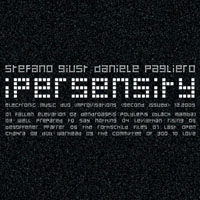 ”Ipersensity” è un progetto nato nel 2000 a cui tengo molto, anche perchè il modo che abbiamo di lavorare è davvero originale nel panorama elettronico contemporaneo: fatto com’è di laptop, sequencers, etc.
Una immersione da parte tua nel lato tecnico e umorale di questo duo renderebbe più chiarezza e giustizia a queste musiche con l’animo ‘maledettamente’ oscuro e saturo di (sofisticata) complessità nella tessitura dei ritmi.
Non resta che sentire un tuo parere…
Il progetto è organizzato così: Daniele invia tramite collegamenti midi dei suoni suscettibili di variazioni ad otto pads elettronici che io suono utilizzando le bacchette. In questo modo le scelte operate da uno si riflettono sull’operatività dell’altro. In pratica il suono (altezza, timbro, volume, attacco) di ciascun pad può cambiare o solo alterare in qualsiasi momento e analogamente anche la mia percussione di quei suoni può variare, secondo una sensibilità/necessità tipica in un duo di improvvisazione libera. C’è qui uno strettissimo rapporto tra sviluppo sonoro e movimento ritmico: solitamente dipendono da un singolo musicista che può controllare entrambi sul proprio strumento (pensa ad esempio ad un contrabbassista che con il suo strumento decide tutto: quali note fare o quali suoni produrre, la loro intensità, l’attacco, il ritmo, etc.) mentre in questa peculiare circostanza sottostanno a due musicisti distinti (Daniele controlla lo sviluppo sonoro, io sviluppo il movimento ritmico).
Il prossimo disco – il terzo, che stiamo per registrare – sarà un ulteriore passo in avanti rispetto a quanto fatto fin’ora: un programma di intelligenza artificiale controllerà quello che faccio sui pads, elaborando in tempo reale le varianti da sottopormi in funzione di quello che sto facendo in quel momento (in pratica improvviserò con una macchina intelligente) mentre Daniele sarà più libero di lavorare su campionamenti ed aggiunte di materiali anche esterni durante l’improvvisazione, sarà cioè più smarcato dal dovermi seguire passo passo (cosa che per altro riusciva incredibilmente a fare anche prima!). Insomma, mentre io suono, Daniele controlla: intonazione, tempo di attacco del suono, durata del suono, parametri di sintesi, campionare/suonare il campione a diverse velocità, ricampionare lo stesso campionamento più volte, tutto questo in tempo reale con un’unica interfaccia! Max/msp è geniale. La musica che produciamo si inserisce certamente nella famiglia della nuova musica elettronica, per così dire legata anche a certa techno sperimentale evoluta.
Tu dici “musiche con l’animo maledettamente oscuro”… sì è vero, direi anche “no future”: è per la gravità dei fatti del mondo, un tema ricorrente nei nostri dischi, cioè la consapevolezza del controllo che il potere economico/politico/militare – gestito da una ristrettissima elite – esercita sugli individui di tutto il mondo, che sono manipolati e resi schiavi da una infinità di reti: mass media, associazioni segrete, chiese e religioni, partiti politici, banche, etc. Non è più paranoia, non è più teoria del complotto: è tutto vero, documentato: un ristretto numero di bastardi controlla la nostra esistenza su tutti i livelli, e lo ha sempre fatto, prima con i Re ora con la Nestlè… Solo per fare un esempio, non si può più dire che le ‘scie chimiche’ (chemtrail) sono frutto dell’immaginazione di qualche paranoico in cerca di suggestioni orwelliane: esistono foto, documenti, testimonianze, sono fatte con polveri di bario, alluminio, filamenti di silicio… tutte cose tossiche per gli esseri viventi. Se si hanno dei dubbi sulle cose che ci accadono intorno, anche solo un ragionevole dubbio, vale la pena approfondire queste cose – con internet è abbastanza facile. Bisogna liberarci da questa realtà opprimente che nulla ha a che fare con la vita e le aspirazioni di noi esseri umani.
«E quando il gioco si fa duro, i duri cominciano a giocare» creativa… se c’è una cosa che voglio comunicare con la musica che ho suonato fino ad oggi è proprio questa: sgombrare la mente, apertura senza filtri, abbandono al cosmo, comunione… (a scanso di equivoci: non sono seguace della New Age!).
Dal motto combattivo dell’immortale John Belushi, partiamo per descrivere il tuo (vostro) stato d’animo ‘ribelle’ e critico che sciama fuori durante la discussione in/per “Ipersensity”. In quella sede affermavi che:
«… un tema ricorrente nei nostri dischi, cioè la consapevolezza del controllo che il potere economico/politico/militare – gestito da una ristrettissima elite – esercita sugli individui di tutto il mondo, che sono manipolati e resi schiavi da una infinità di reti: mass media, associazioni segrete, chiese e religioni, partiti politici, banche, etc. Non è più paranoia, non è più teoria del complotto: è tutto vero, documentato: un ristretto numero di bastardi controlla la nostra esistenza su tutti i livelli…»
Da ciò sorge spontaneo e d’obbligo chiederti di ampliare (AMPLIFICARE) questo ardente-stato di rivolta, di espressione contro-radicale che mediante la musica, l’improvvisazione anche più cruda e istantanea, azioni contro un insieme di elementi che racchiudiamo sotto l’agognato termine di sistema…
Dopodichè, sarebbe curioso conoscere se esistono progetti precisi che nascono e in cui ci si cimenta, da parte tua e di altri compagni, con più affezione ad una causa/forma militante e di protesta.
Non proprio direttamente in questo senso – anche se la considero una lodevole forma e arte di protesta – ma sono rimasto folgorato dall’impro-action che insieme a Marino Josè Malagnino hai tirato fuori nel contesto de L’Amorth Duo.
E’ significativo e merita una riflessione (possibilmente da te ampliata) sulla ‘richiesta d’attenzione’ che ponete come mood centrale del combo:
«… riporta(re) alle orecchie un mondo che all’apparenza si conosce, ma appena confuso, non si riesce ad individuar più…».
Musica e società… beh, la situazione di estremo disagio che vive il mondo contemporaneo è sotto gli occhi di noi tutti: la politica non ha dato le risposte ai sogni che ha alimentato, l’economia continua a fare i suoi interessi malati come ha sempre fatto, il costo della vita lievita continuamente, gli intrattenimenti culturali sono penosi e di qualità bassissima, l’integrazione razziale è un miraggio, l’ignoranza esponenziale calpesta le persone di ‘buon senso’ (non l’ignoranza dovuta alla mancanza di buone letture, ma quella che risulta dalla manipolazione pubblicitaria e dalla televisione che entra nelle case di tutto il mondo).
La domanda che penso sia lecito porsi dovrebbe essere: perchè tutto questo?
Condivido appieno l’opinione secondo la quale c’è qualcosa di profondamente perverso e attentamente orchestrato dietro a tutta questa situazione e, cosa sconvolgente, fin dalla notte dei tempi. Ad esempio chi ha deciso – e sulla base di cosa – chi dovesse diventare aristocratico e padrone delle terre su cui far lavorare il popolo? Chi c’era dietro la rivoluzione francese? Chi c’è dietro la Comunità Europea? Ecco alcune domande che credo siano importanti, alle quali la scuola o emeriti ‘intellettuali del sistema’ risponderanno con emerite ‘cazzate’ a cui loro per altro credono ciecamente. Possibile che le religioni più importanti del mondo siano alla base degli attriti sociali e della xenofobia? Se si leggono libri non scolastici, si viene a conoscenza che tutte queste religioni sono state, né più né meno, che delle invenzioni per controllare i popoli e tenere a freno quello che è nella natura umana: la vocazione alla libertà, all’amore… mentre quello che fanno è alimentare l’odio, l’intolleranza, la violenza, mascherando il tutto con l’ipocrisia. Ma secondo te le cattedrali ti sembrano ‘posti normali’? ‘Tranquilli’? Manifestazioni della gioia di vivere? Con tutti quei simboli massonici, quella tristezza e quel dolore continuamente espresso?! Qualcuno vuole impossessarsi delle ragioni degli esseri umani, questo è quanto, e personalmente lo trovo palese! I governi lavorano contro gli esseri umani, è tangibile! I mass media, le grandi società industriali, sono controllate da poche persone che si tramandano la gestione all’interno di lobby ben organizzate, e tutto a noi pare democratico, libero… e già… come la libertà d’espressione… ma allora perchè i mass media amplificano sempre i pensieri e le personalità più futili se non imbecilli? Ci rispondono che questo è quello che vuole la gente! Balle! La gente è stata educata ad accettare incondizionatamente queste cose, a non scegliere, a non ricercare, a non essere padrona di sé stessa… Sono cosciente che è pericoloso dire tutte queste cose, i controllori non mancheranno di aggiungere queste note alla mia scheda… e sì, perchè non ci sono solo le telecamere nelle strade a monitorarci come pecore…
La gente si arrabbia perchè i writers imbrattano – secondo loro – le mura delle città o le fiancate dei treni… ma si arrabbia forse per tutte le insegne pubblicitarie che vengono imposte a tutti noi e che opprimono il nostro orizzonte visivo – e che per giunta consumano in molti casi corrente elettrica – e poi la società che la fornisce ci viene anche a dire di usarne poca nelle nostre case, perchè non è illimitata?! Così – anche se non amo particolarmente questi linguaggi artistici – io difendo i writers, anche i più scarsi, perchè è un pezzo di giovane umanità che si sforza di dire la sua, e a me questo piace in un mondo in cui chi lo fa, è perchè paga una stupida tassa.
Mi chiedi se ho un gruppo politicizzato: rifiuto questa parola, è priva di significato, sono solo slogan vecchi ed ereditati, fatti per dividere la gente. La musica ha in sé tutti gli elementi per essere un pensiero critico, la musica è pensiero! Lo è stata l’avanguardia del secondo dopo guerra, lo è la musica
L’Amorth Duo è certamente tutto questo, denuncia, rabbia, tenerezza. Una musica che accetta lo stereotipo è condannata alla morte, magari ti arricchisce economicamente, ma è reazionaria per definizione, ed anche molta musica sperimentale oggi lo è, perchè non sperimenta linguaggi diversi ma si incammina in sentieri già tracciati.
Sostando ancora in territori ‘rurali’ prossimi a L’Amorth Duo, non può che sobbalzare alle orecchie quel magico sapore di black music, di Jazz con la J maiuscola, che s’inala mediante un campionario di armonie decisamente particolari nei vari frangenti delle improvvisazione in quel dell’Hybrida Space.
Personalmente, ho pensato tantissime volte, per via delle percussioni ai rintocchi dell’ART ENSEMBLE OF CHICAGO, a “Compulsion” di Andrew Hill (pianista che amava molto la scuola di Malachi Favors), a Cecil Taylor…
E’ proprio questo alone impalpabile di tradizione free che, mischiato alle manipolazioni ‘casalinghe’ dominanti, forma seriamente un compiuto manifesto di sana e inviolabile improvvisazione ‘futuristica’.
Sinceri complimenti… tu cosa ci racconti a riguardo, sei d’accordo con gli echi AACM?
E’ bello che questa affinità, per quanto sottile, traspare… ovviamente amiamo L’Art Ensemble of Chicago, Cecil Taylor, i tanti i musicisti storici dell’AACM… la nostra musica deve sicuramente moltissimo a loro e in qualche modo ne è figlia certamente, ma anagraficamente siamo diversi e conseguentemente anche le sonorità che inglobiamo sono diverse, perchè le stratificazioni culturali dei nostri giorni sono progredite e tutti i riferimenti che servono come fondamento del fare musica oggi, si sono arricchiti di nuove possibilità rispetto agli anni sessanta/settanta e noi ne teniamo conto naturalmente, perchè non siamo dei nostalgici, non suoniamo jazz ma qualcosa che lo ingloba, questo assolutamente sì.
Quello che ci accomuna ai maestri che citi è l’attitudine alla rivoluzione culturale, la curiosità, la sperimentazione; abbiamo la stessa urgenza espressiva. Marino è giovanissimo, abbiamo età decisamente differenti, ma a dispetto dell’età ha una maturità ed una capacità di introspezione assolutamente fuori dall’ordinario, è una persona brillante e intelligentissima, è stato molto bello condividere il tour che abbiamo fatto a maggio.
Con l’ingresso in campo del trio che condividi con Lorenzo Commisso (laptop audio) e Alan De Cecco (laptop video), Papiers Collés, entra in campo un terzo fattore nella costruzione della musica, le immagini e, quindi, l’elemento audiovisivo.
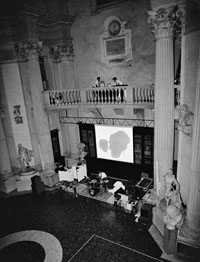 Non è per caso che dal vivo ci vestiamo con camicia bianca e cravatta nera, ed anche pantaloni e scarpe nere. Lo facciamo per ragioni formali ben precise: quel modo di vestire ci rende irriconoscibili rispetto al tempo storico: nei secoli scorsi gli artisti, gli scrittori, i musicisti, tutti venivano ritratti o fotografati vestiti in questo modo, in bianco e nero, era quella la maniera di presentarsi, la fotografia non era a colori… così vestendoci ci ritagliamo uno spazio a-temporale, perfetto per le citazioni alterate che continuamente includiamo nel nostro lavoro.
Scansando l’andatura architettonica del gruppo, quello che si percepisce dall’ascolto di “Live in Villa Manin” sul MySpace è una musica vasta, con sotto delle sfumature d’elettronica reiterate, minimali, fragili, subacquee, delicate; ma comunque ben disposte all’armonia contemporanea. Ed è in ciò che primeggia come indubbio principe-dei-giochi il fattore ritmico, con i continui giochi di contrasto e contro tempistica che fagocitano (e fagociti te) in vena-libertaria da sopra. Bellissimo, misterioso e come sempre elegante.
Papiers Collés è un progetto artistico nato nel 2004 con l’intento di far convivere estetiche differenti e cronologicamente distanti nel tempo. Musicalmente quello che ci interessa fare è trasformare frammenti di musica classica in composizioni nuove e irriconoscibili, anagrammi musicali che rappresentano un’interessante riflessione sulle potenzialità del suono. Azione (batteria) e staticità (digital sound) si contrappongono nelle nostre performance, come anche le culture da cui provengono, musica di improvvisazione contemporanea ed elettronica. Il progetto usa con estrema libertà elementi estetici differenti, al fine di mettere in discussione le abitudini concettuali del senso comune, giocando su cosa è reale e cosa non lo è, cercando di sottolineare le varie sfumature e possibilità di riflessione, ricevute dalla riproducibilità tecnica che caratterizza il nostro fruire artistico contemporaneo.
La musica di Papiers Collés è molto libera, ma ci sono delle strutture organizzate su cui io improvviso ed alle quali devo prestare sempre molta attenzione. Dal vivo abbiamo suonato soprattutto in gallerie d’arte; Lorenzo è un artista visivo, così come Alan, e sono entrambi bravissimi, con all’attivo diverse mostre e collaborazioni; io stesso amo da sempre l’arte visiva, da anni mi occupo anche di graphic design. Il lavoro visivo di Alan – tutto materiale da lui filmato o sintetizzato con programmi informatici – tiene conto dei primi esperimenti del cinema surrealista e delle nuove tendenze dell’avanguardia; collabora anche in contesti diversi, come ad esempio dj-set di Stewart Walker.
Volevo chiederti di parlare circa le ultime uscire di Setola di Maiale, come ad esempio Those Lone Vamps, in cui compare l’elemento voce incarnato da Shawn Clocchiatti-Oakey impegnato, tra l’altro, anche alla chitarra acustica. Purtroppo non ho ancora sentito il lavoro in questione ma anche una tua vertenza attorno al mondo del blues (sempre secondo un’ottica ‘altra) mi farebbe molto piacere avvenisse.
”Black Taper Taiga” è nato in seguito ai dischi fatti su Setola di Maiale dei Those Lone Vamps. Da questo contatto è nata un’amicizia che è poi sfociata naturalmente in questa collaborazione. Si tratta di musica totalmente improvvisata ed aderente alle estetiche di ciascun musicista del trio, che spaziano dalla musica sperimentale al blues. L’idea è stata infatti quella di registrare in studio del materiale che avesse la parvenza di “canzone” e che riflettesse quelle estetiche, seppur stravolgendole. Chitarra elettrica, batteria, qua e là chitarra acustica, una base techno-blues allucinata e la voce imponente di Shawn… questi gli ingredienti strumentali.
Il mio rispetto per il blues è scontato, anche se non ascolto musica che può definirsi propriamente blues, piuttosto se ne avverte l’eco. Probabilmente le cose più blues che ho ascoltato sono Tom Waits ed i primi albums di Nick Cave, o alcuni musicisti africani o cose molto vecchie, mentre il blues più convenzionale che si suona oggi non mi piace per niente, è come il reggae, mi pare musica chiusa in se stessa senza possibilità di evolvere in qualcos’altro, interessata a rispolverare idiomi musicali già acquisiti. Those Lone Vamps è un ottimo progetto di musica non convenzionale dalla forte personalità, totalmente immersa nella cultura e nell’immaginario del blues. Shawn e Vincent hanno ottime conoscenze musicali a 360 gradi e questo li ha portati ad avere una visione poco ortodossa del fare musica, aperta a suggestioni “altre” e sperimentali, e questa è la ragione per cui sono presenti nel catalogo setolare, hanno spezzato dei cliché. I testi sono molto importanti nel loro progetto, lo stesso shawn è un poeta che ha pubblicato – con il suo vero nome (credo non voglia sia accostato al suo fare musica) – due libri.
Un altro lavoro ‘Setoliano’ piuttosto curioso è “Assortimenti N 1-5”. Il ‘sottotitolo’ è alquanto significativo, perché recita: «Music For Drums and Sampled Orchestra». Credo sia la prima volta che trovo dinanzi un simile esperimento dove a sovrapporsi in crescendo sono campionamenti&samples di (esclusiva) origine-matrice sinfonico-orchestrale. Narreresti con piacere l’humus celato dietro un tale complesso che potremmo, neanche tanto ironicamente, battezzare come ‘nuova musica classica’?
 Il progetto nasce dalla collaborazione che ho avuto con Ben Presto, alias Patrizio Pica. Ci siamo conosciuti nel 2000 in occasione dell’Off Festival al Leoncavallo di Milano, ed è da allora che abbozzavamo l’idea di collaborare insieme… Il disco parte da registrazioni in solo di batteria, suonata free e in maniera abbastanza ‘piena’; voglio dire portando al minimo le parti di colore e di suoni piccoli, proprio per dare da subito una direzione del tutto particolare al montaggio successivo che Ben Presto avrebbe fatto con i suoi campionamenti di musica classica contemporanea (sinfonica e di piccoli organici orchestrali). Quello che volevamo evitare era l’ennesimo risultato di ricerca pseudo-post-weberniana, tutta incentrata su timbri e silenzi… Ne è uscito un lavoro contemporaneo dai tratti decisi, raffinato e nervoso. Ben Presto ha fatto un lavoro eccellente! Ed è una persona meravigliosa!
Visto che prima nel parlare è varcato fuori il mood di T. L. V., potresti spingerti in una panoramica sui lavori prodotti di recente, collegati principalmente ad altri artisti. Il catalogo di Setole di Maiale, oltre ad essere apertamente eterogeneo, vede scorrere figure importanti del jet-set nostrano e internazionale. Penso a Joëlle Léandre, al disco di Logoplasm e Punck, ancora a Ben Presto (ed in particolare al recente “I Placca”), al circuito impro-pugliese dell’AFK di Vito Maria LaForgia & Co…
 Un progetto a cui sono affezionatissimo è Camusi, in compagnia di Patrizia Oliva alias Madame P. Ad ottobre abbiamo fatto 5000 km di tour in Francia, Spagna e soprattutto Portogallo, ed è stato bellissimo e ricco di consensi. Penso che la musica che facciamo sia molto innovativa e interessante nelle idee e nell’approccio, una musica che è totalmente improvvisata ma che può risultare così delineata che la gente quando ascolta il nostro disco tende a non credere sia frutto di improvvisazione libera. Patrizia è un’artista incredibile, di una sensibilità straordinaria. I suoi concerti sono sempre un’esperienza profonda ed emozionante, che sia ‘in solo’ come Madame P o con Camusi o con altri musicisti. Un nome, il suo, che dovrebbe essere portato sul palmo della mano dal giornalismo musicale italiano. Un altro progetto a cui tengo molto è il trio con Gianni Gebbia e Xabier Iriondo, con cui abbiamo fatto un tour in primavera e che cercheremo di ripetere… uscirà probabilmente anche un disco con le registrazioni dal vivo tratte da quel primo tour…
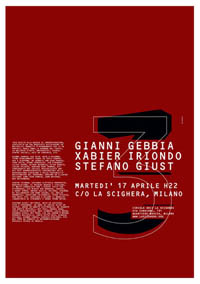 questo che ricerco con questa piccola realtà sotterranea: a me interessa la bontà culturale della musica da produrre, non i nomi altisonanti, e questo è sempre stato un punto importante per me a cui prestare fede, che mi regala chiarezza di giudizio e libertà di movimento.
Cielo, non saprei da dove cominciare!! I nomi che poni sono tutti interessanti alle mie orecchie e ai miei sensi. Ogni disco prodotto è vissuto con amore e gioia… I progetti in cui sono coinvolto in prima persona son tutti importanti per me, non ho mai preso sottogamba un disco o un concerto in vita mia… Tengo moltissimo ai progetti di cui abbiamo parlato fin qua come L’Amorth Duo, Papiers Collés, Ipersensity, oppure ai dischi di altri musicisti su Setola, oltre ai nomi che citi nella tua domanda, penso a St. Ride, Duel (il duo di Massimo De Mattia e Denis Biason), il disco split con Jean-Luc Guionnet, Claudio Rocchetti, Fhievel, Luca Sigurtà; i dischi di Tiziano Milani, l’orchestra Improvirusoundexperience, l’album di Luca Sciarratta; le mie collaborazioni con gli amici dell’AFK Records; Margine (gruppo di parecchi anni fa con cui ho registrato quattro dischi in quartetto con gli Anatrofobia al completo), i dischi di Ninni Morgia e Jordon Schranz registrati a New York; i dischi in cui ho suonato in trio con i londinesi Andrej Bako e Karen O’Brien (Rediffusion) o in quartetto con l’aggiunta di Gareth Mitchell, con il quale ho anche un duo di cui uscirà un disco a breve…
In generale, per me, parlare dei dischi prodotti da Setola è sempre complicato: mi piacciono tutti e li vivo tutti sullo stesso piano… tengo poi moltissimo alla veste grafica, alle carte da utilizzate… mi sforzo che risultino degli oggetti piacevoli e ben fatti!
Alcuni di questi albums hanno nomi di musicisti consolidatissimi, è vero, ma non è
É ovvio che mi da’ grande soddisfazione produrre un disco con certi musicisti, sarei un bugiardo se lo negassi, ma non è questo il punto d’arrivo. Ho sempre avvertito la consapevolezza che le vere novità stanno dietro ai nomi nuovi, o quelli che si muovono nel sottobosco, e dei quali spesso anche i nomi grossi e più intelligenti si nutrono. Quando le realtà sono così ai margini del mercato musicale, ogni lavoro nasce da stima reciproca, da amicizia, dalla condivisione di una comunità di musicisti, dove il fatto elitario o della nicchia non è ricercato per niente, piuttosto è una conseguenza di una cattiva, stantia e grassa circolazione culturale, non solo nel nostro paese.
Non mi stancherò mai di ripetere quanto male facciano quelle testate a scrivere dei soliti nomi, spesso stranieri che già occupano pagine su pagine in tutte le riviste. Non dedicare spazio ai musicisti italiani e snobbarli è non riconoscerne il talento, è render loro vita difficile quando cercano concerti, è abbandonarli a cachet sempre più poveri – addirittura ridicoli! – è suggerire implicitamente al pubblico di disertare i loro concerti, perchè questo è l’effetto che si produce inevitabilmente… e son tutte cose molto spicciole queste che dico, legate alla vita di tutti i giorni, alla sopravvivenza… ne vien fuori una fotografia impietosa della realtà concertistica e discografica italiana. Ad esempio non ho nulla contro i Talibam!, ma certo l’enfasi mostrata per questi americani è maggiore che per altri musicisti italiani che praticano quelle idee da decenni… così la gente và più volentieri a vedere questi nomi che altri italiani… la stampa produce questi effetti e se si vuole qualcosa di culturalmente diverso in questo paese, bisogna che tutti coloro che hanno qualche possibilità di muovere le acque lo facciano, e subito! E’ uno sfascio! Fortunatamente qualcosa si muove in questa direzione, come ad esempio l’ottimo festival romano Scatole Sonore e il network Tempia. Ora io non voglio sembrare un lagnoso e polemico essere umano – al contrario non sono per niente frustrato dalle mie scelte e condizioni, questo mi piace sottolinearlo – ma come ho detto prima la situazione è sotto gli occhi di tutti. Continuerò imperturbabile a fare le mie cose con la mia solita e serena disinvoltura, anche se le riviste cartacee in questo paese scrivono cose inesatte e approssimative sul mio conto o non scrivono affatto! Non vivo per loro, questo è sicuro. Il mio problema è che probabilmente ho ancora una visione romantica del fare musica, e così del giornalismo.
The Last Question. Un ultimo quesito per i lettori di Kathodik, diciamo anche di routine, vuole apprendere due cose: sia cosa ha entusiasmato Stefano Giust negli ultimi tempi, sia cosa ha riservato nel cassetto per il prossimo futuro. In generale, a 360°, enuncia lavori, collaborazioni, personali e non, produzioni ed etichette che ti colpiscono per il loro appeal, genuinamente, non conforme.
 Molte energie nuove si ascoltano ad esempio a Bologna, che ha una lunga tradizione di musicisti creativi; c’è il collettivo Gnù che include tra gli altri Dario Fariello, Chris Iemulo, Diego Cofone, Nicola Guazzaloca, Filippo Giuffrè; e poi la scena romana con Renato Ciunfrini, Davide Piersanti, Lendormin, A Spirale, Tiziana Lo Conte… e poi ancora nel nord, Claudio Parodi, Alessandro Buzzi, Airchamber 3, Anatrofobia, Claudio Rocchetti, Michele Selva, Punck, St.ride… sono tantissimi, tantissimi, altro che crisi della musica… ti dico un nome e me ne vengono in mente altri dieci… è fantastico!
Penso che questo che stiamo vivendo sia un momento molto positivo e fertile per la creatività in Italia e vorrei poter documentare il più possibile tutto questo con Setola di Maiale; sono tanti i progetti in cantiere per quest’anno.
Ci sono anche molte etichette che mi piacciono o che semplicemente stimo per come lavorano e si pongono: Burp di Firenze, Chew-Z Netlabel di Torino, Wallace di Mirko Spino, AFK Records di Bari, Afe Records, Rudimentale, Bar la Muerte, Improvvisatore Involontario, solo per fare dei nomi…
Ho molta stima per musicisti come Vincenzo Vasi, Marcello Magliocchi, Gianni Gebbia, Tiziano Milani, Vito Maria Laforgia, il Jealousy Party, Gianni Lenoci, Xabier Iriondo, Lullo Mosso, Dominik Gawara, Cristiano Calcagnile, Daniele Pagliero, Francesco Cusa e mille mille altri…
Ecco, perchè penso che è buffo leggere su una rivista: ‘… wow, questo è il disco del mese o la nuova rivelazione dell’anno…’
Se comprassimo tutte le riviste in uno stesso mese troveremmo altrettanti gruppi dell’anno… poi che faccia piacere ai diretti interessati va bene, è altrettanto ovvio – a me ha fatto piacere quando Stefano Pifferi lo ha scritto su SentireAscoltare a proposito di Camusi – però non ci si deve prendere troppo sul serio insomma… davvero i musicisti (ed anche il pubblico in generale) dovrebbero dare meno importanza al giudizio delle riviste, anche se poi è importante per lavorare… purtroppo questo sì… ma chi è davvero onesto sa che non esiste il migliore, ce ne sono tanti di migliori, una marea di migliori, un po’ di umiltà non fa male e fa vivere meglio, molto meglio.
Collegamenti utili:
www.setoladimaiale.net
www.myspace.com/setoladimaiale
www.myspace.com/stefanogiust
www.myspace.com/camusi
www.myspace.com/amorthduo
www.myspace.com/papierscolles
www.myspace.com/ipersensity
Ellen Fullman/Sean Meehan ‘Ellen Fullman + Sean Meehan’
(Cut 2007)
Puntano al buio oltre il sole.
Tre
brani registrati nel 2006 in California nello studio della
Fullman.
Circonvoluzioni oppiacee dalle parti della
risonanza infinita.
Il long string instrument (lsi) utilizzato
dalla Fullman è un doppio set di sua creazione di corde
metalliche parallele lunghe 14 metri (variabili sino ai 20 ed
oltre…).
Azionate tramite sfregamento o pizzico, le corde
metalliche del lsi sono esperienza audio/visiva sconvolgente quanto
conturbante.
Generatori di risonanza astrale?
Codificatori di
segnale da spazio profondo?
Ascoltatevi i suoi incantevoli “Body
Music” o “Change Of Direction” (tanto per citarne
due); poi ditemi….
Comunque, il lsi della Fullman entra in
copula discreta con il rullante ed i cimbali di Sean Meehan
(batterista impro stanziale dalle parti di New York), il risultato
dell’umidore generato è: sapida sinfonia di sinewaves in
orbita ellittica.
Lo stile atipico di Meehan è
perfettamente complementare al lavoro della Fullman.
Senza
overdubbing o effetti di sorta, i due si impegnano in tre set
ascensionali di estatici drones microtonali.
Calore infinito che
cova sotto le ceneri, sinestesia allo stato puro, spazio libero per
menti aperte, David Toop lo inserirebbe di prepotenza nel suo
“Oceano Di Suono” (edizioni Costa e Nolan, se non
lo avete fatto cercatelo e leggetelo…).
I cimbali di Meehan
costantemente sfregati e sollecitati, una sinfonia metallica e
minimale di overtones simili ad un’enorme, immenso; grande piano
solitario in fase di riverbero automaticamente innescato dalle dita
di Dio.
L’idea dello studio che lentamente si satura di suono è
un pensiero che mi lascia salivare copiosamente come un Lama in
calore.
Un’espansione, un perdersi.
Rannicchiarsi impauriti al
cospetto di un fulmine.
Emanazione organica.
Vi voglio bene;
procuratevelo.
Le mie parole in croce avranno allora un senso.
The
circle never ends.
Voto: 8
Link correlati:Cut
GoGooo ‘Long Lontain’
(Baskaru/Dense 2007)
“Long, Lontain” è un delizioso involucro in cui confluiscono gocce di intimo canto acustico e scampoli d’elettronica concreta. Un’equazione che, fisicamente, si traduce in molecole di low/fi e simil-folk astratto screziate da pratiche elettroniche di piglio concreto, come i field recordings e il montaggio finale per mezzo del pc. Essa infonde all’ambiente circostante la grazia di un musicista solitario nel miscelare pacatamente climi tenui e romantici, a tratti soporiferi e confinanti con la magia pura.
Dopo esser risorto con il nome-di-battaglia di GoGooo, il novello collagista francese, Gabriel Hernandez, partendo dallo studio manipolativo e non convenzionale della chitarra finisce, come molti suoi ‘colleghi’, ad intrattenere relazioni più intense con la pratica multi-strumentale. Il debutto ufficiale in causa è scolpito interamente nella propria cameretta, mediante l’ausilio di un semplice registratore e di tanta fantasia. Al fine di tracciare una mappa di suoni carica di spunti, il nostro si barcamena tra l’inseparabile chitarra, la melodica, un organo, il carillon e una sfilza di ingegnosi samples ambientali.
Qualcuno ha tirato fuori il predominante umore folk del cd, altri si sono limitati a circoscriverlo come semplice patchwork a più tinte e volumi. Al contrario, penso che si respiri una scarsa inclinazione di GoGooo a rintanarsi nel classico format delle ballads. Si percepisce un parallelo con le prime cose dei Collection Of Colonies Of Bees, ma privo dello slancio ritmico post-rock e molto più incline all’astrazione tout cour. Dieci tasselli che appiano come delle inusuali ninne-nanne, stranianti e ipnotiche, da ascoltare al chiaro di luna. Arpeggi d’acustica; molteplici voci della natura; il suono dell’organo trasformato in ovattato drone; micro-frequenze che a stento si fanno sentire… toccare.
Questi sono solo alcuni dei frammenti – di un’unica e salda meraviglia sonora – che si trovano nascosti nel sentiero notturno solcato da “Long, Lontain”: un lavoro che oltre ad imprigionare i sensi in qualcosa d’infinitamente buono, mostra il miglior lato della sperimentazione moderna. Mica occorre a tutti i costi introdursi in ostiche meditazioni avant per centrare il bersaglio della vera novità. Non si tratta più di stupire, ma semplicemente di sedurre il fruitore con soluzioni complesse, ma che soprattutto non perdano di vista dolcezza e gentilezza d’armonia.
Voto: 7
Link correlati: Baskaru
Clara Clara ‘AA’
(SK Records/5ive Roses 2008)
L’energia che promana da “AA” dei Clara Clara ha un carattere seriamente dirompente, sin dall’iniziale Observe la colère: il “punch” di questo trio francese – Amelie Lambert alle tastiere (che si immaginano derelitte e “vintage” al massimo grado), Fancois Virot alla batteria e Charles Virot al basso: tutti pure a qualche vocalizzo allo stato brado, che definire canto è inappropriato (ma che può trascinare alla grande, come nella “debauche” White Stripes in …) – è notevole ed insolito (non si fatica a credere a live infuocati: per maggiori informazioni www.myspace.com/claraclaraband).
Reiterazioni quasi minimalistiche di un organetto maltrattato e spompato (Baise main, Bravo princesse), linee di basso frenetiche e distorte, con sospetti di virtuosismo (Nous les plus que respectons, Champion), batteria ragionevolmente pesante e varia (Alors que tout sépare); ma anche temi che ricordano garbati il Settecento musicale transalpino (S’il vous plait) e una malinconia melodica alla Blonde Redhead col basco (Les forces de l’amour). Non si può dire altro che “AA” non si distingua (in meglio) nel mazzo degli epigoni attuali del “math” e del “post” rock.
Da promuovere e seguire assolutamente: alcuni contatti presso press@fiverosespress.net
Voto: 8
Link correlati:5ive Roses
Sikitikis ‘Il mondo è una giungla… per chi non vede al di là degli alberi’
(Casasonica/Groud Dept. 2008)
Il mondo dei Sikitikis magari non è proprio la giungla evocata dal composito titolo della raccolta (i nostri paiono pure tipi ironici, a partire dall’iniziale Il mondo è una giungla fino all’acme del rifacimento di Storia d’amore di Cementano/Del Prete), ma è comunque discretamente nero e inquietante, come alcuni aspetti della natia Sardegna ed il progetto grafico del CD. I quattro – mascherati dagli pseudonimi di Diablo (voci e cori), Reverendo Jimi (bassi puliti e distorti), Zico (tastiere varie), Regaz (batteria); suonano in “Il mondo è una giungla… per chi non vede al di là degli alberi” anche Nicola Pedroni alle percussioni acustiche ed elettroniche, il bravo Paolo Parpaglione al sassofono baritono in Piove deserto e Al primo colpo, il produttore Ale Bavo al Fender Rhodes in Piove deserto – che hanno goduto della piena collaborazione di Max Casacci dei Subsonica, allestiscono un teatrino “pulp” (in verità, più nel senso di “recupero di sonorità di/da sottobosco sonoro” che di “sanguinoso”) allietato da suggestioni disparate e a volte incongru(e/enti) (esempio, in Onde concentriche ci sono nell’ordine: rock, la voce femminile di Robertina, cori epici; nella successiva Le gran diable le tastiere sono spiritate e il basso è effettato come nei Nine Inch Nails d’annata).
La professionalità del progetto si presenta alta – la masterizzazione è opera di Greg Calbi – e i suoni sono prestigiosi, a volte superiori ad una scrittura non definita con chiarezza (la presenza di canzoni buone e tese come Rosso sangue e L’ultima mano dimostra che una certa capacità c’è; da espungere radicalmente invece brani derivativi come Little Lu). Il lavoro dei Sikitikis è quindi da indirizzare proprio in una più centrata costruzione dei pezzi.
Su MySpace: www.myspace.com/sikitikis
Voto: 6
Link correlati:Sito Dei Sikitikis