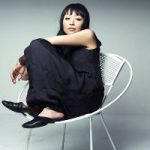

Keiko Higuchi Interview

 Fourth episode of the rubric Chi fa da sé fa per tre: Keiko Higuchi.
Di Marco Paolucci Homepage photo by Hiroshi Manaka (tiimu)
10/11/2012: Keiko Higuchi is a Japanese musician who likes to experiment with her voice, and in her reinterpretations of the classics she has a style reminiscent of Patti Smith and Diamanda Galas. In every live performance as well as in her various recordings, she is able to communicate her involvement in, and passion for, playing and singing. After seeing her in a live performance and having talked about it here, your Kathodik Man thought she would be perfect for our rubric Chi fa da sé fa per tre. So, I immediately formulated and sent her some questions, and our artist was ready to answer, and was fluent in her explications, as you can read it for yourself. I’d like to thank Filippo Focosi for reviewing the translation. One last thing: you can read the Italian version of the interview right here.
1. What are your musical backgrounds? How did grow, in yourself, the idea of playing the piano? Why did you choose this instrument?
 (photo by Masae) I loved singing as a kid, I was in an elementary school, maybe the 3rd grade or so when I started taking some keyboard lessons from this lady in my neighborhood, who was a car racer of some sort. Later I went to the states at the age of 15, and I started taking vocal lessons at the age of 16. I was also taking some piano lessons and things in and out of school. I’ve gone to a music college, but I don’t think that helped creating the way I play now. I went there for 1 year and dropped out anyway. When I started performing in the band named Saturnalia in Boston, I did voice and movement. at times I was playing some toys or objects. Then I also started picking up a trombone. so, yes, I am using my voice as my main instrument but I never considered myself being a real singer or a pianist for that matter. I’ve also taken some lessons on movement and extended vocal techniques at times even through a theater people, and after i came back to Japan in ’98, I had a chance to work with a Butoh dancer, so then I started working more seriously with my body, too. Throughout those years, I was always singing tunes on the piano even when I’ve decided to do vocalization as a free improviser, so it came naturally to do that singing if you are referring to my solo piano/vocal work.
2. Do you have some favorite source of inspiration while composing? Are there “bad masters” to which you owe some feature of your style?
I don’t think I ever compose anything. Well, yet. I work around my improvisation and things, but I am not good at composing. So for that matter, I would never think I am a song writer. I may say I study or analyze some styles or forms, and I don’t think I am not a bad arranger, but when I think of making music, I suck. My arrangement of tunes are so far different from the originals, which may come to the point where the word “arrangement” can ever be understood. I deform, decompose and reconstruct (it sounds like those words have been over-used and I hate to use them) songs into something else, or I just improvise and come up with whole new ones. But again, I don’t think that can never be anything close to “composing”.
3. Do you follow some particular method as you compose the songs?
 (photo by Max) Again I am sorry, but there is nothing I follow because I don’t know a method, the process is similar to what I do with improvisation. I just feel for what I feel like and if that works, that works. The difference from the way I work with improvisation would be that if a song doesn’t work, then it will take another 10 years to nourish. There are some cover tunes I have worked over 10 years, and finally I’ve started playing. There are tunes like that. When I do covers, I follow lyrics. yeah, what I follow can be said that I follow the sound. How I want to pronounce a word with a certain note under a certain chord and thing. This can be syllables, who knows what, but I go with that. Also there are times I write lyrics and later I come up with scores, or I sing and just get inspired to play here or there on the keyboard. But at times I am too busy with mid-and lower registers so I use my foot to do the higher register. Also with my training, I work with body, energy flow, and so I utilize all those elements along with all the kinds of emotion to create something I call “love”.
4. It seems to me that in your concerts you’re trying to overcome the traditional form “performer-in-front-of-an-audience”. I mean that you when perform in a gig, you not only sing some songs but for me It seem that you do more experimentation with your voice, more experimentation with your body, to try to increase the meaning of the song with your performance, to try to create a sort of “total spectacle”. Do you share this impression? If so, what brought you to create your own, say, “concert-performance”? I don’t know if I explicate, let me know.
It is not that I try to show anything, in order to increase the meaning of the song. I do the movement just because that helps my voice to come out in a way I want it to be. Or just the impulse. I do it just because I need to do it. Therefore, I am not, for that matter, striking a pose or anything (especially for my solo) whereas if this is some kind of a performance piece I do sometimes with others, then maybe my movements could be more conceptual or choreographed.
5. You recorded your album in solo, duo, trio: this shows your own ability to interact with other musicians. But, among many, what is your favorite formation?
 (photo by Valentina Seri) They all depict things differently, there are different matters and issues, and I don’t know what my favorite is. Just the different ways of working on things. when I do solo, I think more of love and love for women. the power of women. I am not a feminist, but I am fighting for woman as being the super-woman. When I do collaborations, I work on what can come out of me without reacting or with reacting and to be aware of both or not to be aware of things. What I am concerned is how a sound can come out (even without a sound) and stand up as it can be. But the fact is that it is “easier” to work with a framework, which is on a score. When there is a composition, I know I just need to make it better. when it comes to improvisation, it is not only me, and even when I look back that I sucked at things, it takes time to digest and things…. just a different process…
6. With whom would you like to collaborate?
I would say it is more preferable to play with someone with the similar breathing. also, somebody who can surprise me. Of course, there’s a mutual understanding, so I want also to surprise them.
7. What do you think about current Japanese music scene?
There are way too many happening, and I can hardly follow, to be honest. I get to see people on the same bill, or I go see friends and things, but I don’t have enough time or money to go see all of what’s out there. All I can say is many musicians here are open to unknown, which is great.
8. Whenever you can, you travel to play your music around the world, including Europe and especially Italy. How do you see the international scene in terms of human professional and relationships?
 (photo by Valentina Seri) I don’t quite understand your question here, but anyway, I love playing in Italy because people seem to feel my singing. Perhaps, it also depends on which city I am playing at. Anyhow, the way I sing likely to be considered “too emotional”. But italians seem to know how the emotion can be, as for many, I can be just TOO MUCH (laugh). I think there are cultural differences even though we are all human beings with hearts and emotion. But then, I wanted to create a question to the italians, since they seem to be also over-using the “love” expression too much at times, what is “love”? So for the last performance at Terminal, Macerata, I used the words like “amare, sentire” and asked friends to translate things and sang the phrase “vi amo, quando, vi sentite amati, per questo vi amo”.
9. I mean something both aside from, and inside, the musical scene: i.e., respectivily, the public that you meet when you do your gig, and the other artists that you, again, meet when you do your gig.
That is a difficult question to answer. Each audience is different, and some artists like it to be very quiet, and I like it to be both. But in Japan, for me, it is not easy to get many audience coming over for many gigs (unless it is an event of some sort, it is not so easy for many of us to get many people coming to shows), so I don’t mind it when there are people who are not really listening to me, but be there, they may be interested in me afterwards… there is a possibility.
Speaking of the artists I meet, well, I really cannot answer to this question since when I am playing that night, I really cannot focus on watching other acts. I can talk about the people I play with, but again, a lot of the improv gigs can be only one-time meeting, and I am not there to judge….
10. We end with the “classic” unavoidable question: how you imagine your future, in terms of music, life, and all the rest?
All the extremity comes to a farce; if i can make the best of that farce, that would be cool. I don’t know what the future brings, so I go with the flow. of course, there are things I intensionally make happen, like I have been recording far more this year. I’ve always believed in the power of live performances, but due to the ipod, streaming and downloading thing, it is getting more and more
difficult to get people coming to shows. So I started releasing. but I am doing more this year. I have this urge to press recordings. I am hoping that this is not the sign I am going to die anytime soon, though (laugh). Since I have been working in various fields, with various people from different back grounds, I am feeling that I am in need for presenting all the things I have been working on. Not that I am working on this and that, but what I do is coming from all those different things, and that makes who I am and why I’m doing this and /or that. But what I want at the end would be something based on love. That has never changed. I want to love, want to be loved, too, and I want people to feel the love. I am not speaking of anything conventional, but at the deeper level. something that caresses good and bad and all the things.
Link: Keiko Higuchi Facebook Page: http://www.facebook.com/keiko.higuchi.cleok
Keiko Higuchi My Space Page: http://
Keiko Higuchi Home Page: http://